
Comprehensive Industrial Robot Selection & Application Guide
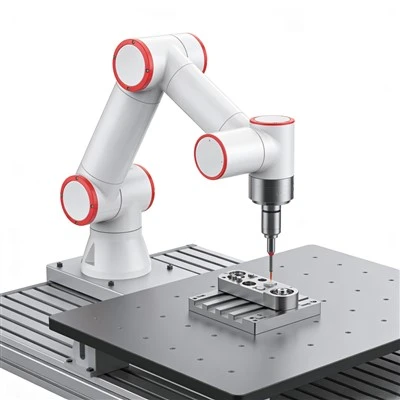
Industrial robots serve as the motion platform at the center of automated production cells. They are utilized for material handling, machine tending, welding, palletizing, assembly, packaging, and other automated production processes. Selecting an industrial robot requires evaluating actual application requirements rather than relying on payload ratings alone. Robot type, reach, repeatability, cycle time, wrist load, mounting position, tooling, controller integration, and safety requirements collectively determine whether a robot is suitable for a specific production cell.
-
![Intelligent Welding Industrial Robot]() Intelligent Welding Industrial RobotThe adoption of Intelligent Welding Industrial Robots in modern manufacturing is a critical approach to boosting product quality and production efficiency, improving workplace safety, and cutting...view more
Intelligent Welding Industrial RobotThe adoption of Intelligent Welding Industrial Robots in modern manufacturing is a critical approach to boosting product quality and production efficiency, improving workplace safety, and cutting...view more -
![Industrial Robot Smart Welding]() Industrial Robot Smart WeldingThe core value of Industrial Robot Smart Welding lies in improving production quality and efficiency while reducing operational costs and safety risks. It delivers high-precision welding with...view more
Industrial Robot Smart WeldingThe core value of Industrial Robot Smart Welding lies in improving production quality and efficiency while reducing operational costs and safety risks. It delivers high-precision welding with...view more -
![ARC1440 Welding Robot]() ARC1440 Welding RobotThe ARC1440 welding robot is a 6-axis automated equipment specifically designed for industrial welding scenarios, focusing on core welding processes such as MIG/MAG, TIG, aluminum welding,...view more
ARC1440 Welding RobotThe ARC1440 welding robot is a 6-axis automated equipment specifically designed for industrial welding scenarios, focusing on core welding processes such as MIG/MAG, TIG, aluminum welding,...view more -
![ARC2010 Welding Robot]() ARC2010 Welding RobotThe ARC2010 Welding Robot designed exclusively for welding applications. With a large working radius, high payload capacity, and precise control performance, it efficiently executes various...view more
ARC2010 Welding RobotThe ARC2010 Welding Robot designed exclusively for welding applications. With a large working radius, high payload capacity, and precise control performance, it efficiently executes various...view more -
![Welding Robot]() Welding RobotThe Welding Robot is a professional 6-axis collaborative robotic arm specifically developed for automated welding tasks in industrial production lines, integrating high-precision welding control,...view more
Welding RobotThe Welding Robot is a professional 6-axis collaborative robotic arm specifically developed for automated welding tasks in industrial production lines, integrating high-precision welding control,...view more -
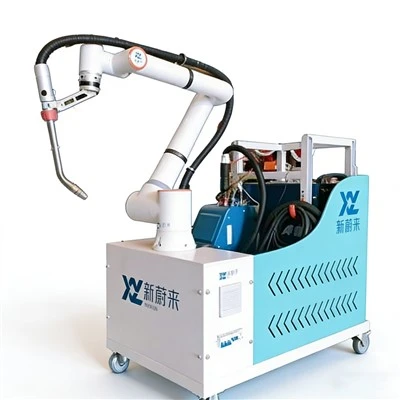
![Mobile Welding Robot]() Mobile Welding RobotThe Mobile Welding Robot is an innovative automated equipment that breaks the space limitations of traditional welding devices. With flexible movement + efficient welding as its core advantages,...view more
Mobile Welding RobotThe Mobile Welding Robot is an innovative automated equipment that breaks the space limitations of traditional welding devices. With flexible movement + efficient welding as its core advantages,...view more -
![Industrial Welding Robot]() Industrial Welding RobotIndustrial welding robots are automated welding systems that integrate mechanical, electronic, computer, sensing, and artificial intelligence technologies. By leveraging multi-axis coordinated...view more
Industrial Welding RobotIndustrial welding robots are automated welding systems that integrate mechanical, electronic, computer, sensing, and artificial intelligence technologies. By leveraging multi-axis coordinated...view more


Key Specifications for Industrial Robot Selection
When evaluating industrial robots for a production cell, the core specifications must be analyzed as an integrated system rather than isolated maximum ratings.
|
Specification |
Engineering Definition & Procurement Consideration |
|
Payload |
Maximum load carried at the wrist under defined conditions. Must encompass the complete tool package: Required Payload = Workpiece + Tooling + Adapters. |
|
Reach |
Maximum access distance within the working envelope, verified against the specific layout and clearance requirements of the automated cell. |
|
Repeatability |
How consistently the robot returns to a programmed position. Critical for precision handling, assembly, inspection, and welding. |
|
Cycle Time |
Actual production speed governed by payload, travel distance, motion profile, acceleration/deceleration, and external synchronization. |
|
Number of Axes |
4-Axis: High-speed horizontal plane operations (handling/assembly). 6-Axis: Flexible positioning and complex tool orientation. |
|
Wrist Load & Inertia |
The size, center of gravity, and inertia of heavy or extended tooling (e.g., welding guns, multi-part grippers) that influence wrist performance. |
Industrial Robot Applications
Material Handling:
Transferring parts between conveyors, machines, fixtures, storage positions, and processing stations.
Machine Tending:
Loading and unloading CNC machines, machining centers, presses, and production equipment with robust controller-to-machine communication.
Palletizing:
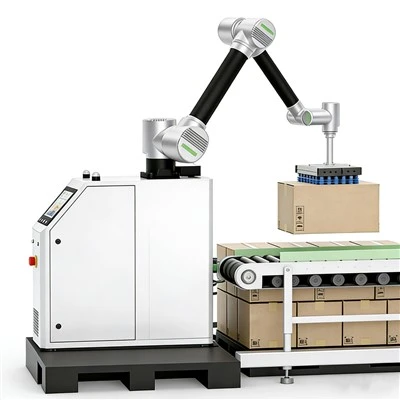
Coordinated movement managing product weight, gripper weight, dimensions, pallet height, pattern configuration, and high throughput.
Welding:
Controlled tool movement, consistent path positioning, torch weight management, and welding power-source integration compliant with standards such as ISO 10218.
Assembly:
Precise positioning, controlled movement, part detection, and integration with fixtures or machine vision systems.
Pick and Place:
Part transfer, high-speed sorting, and packaging driven by vision systems and specialized gripper design.
Industrial Robot Specification Checklist
Prepare the following information before requesting a supplier quotation:
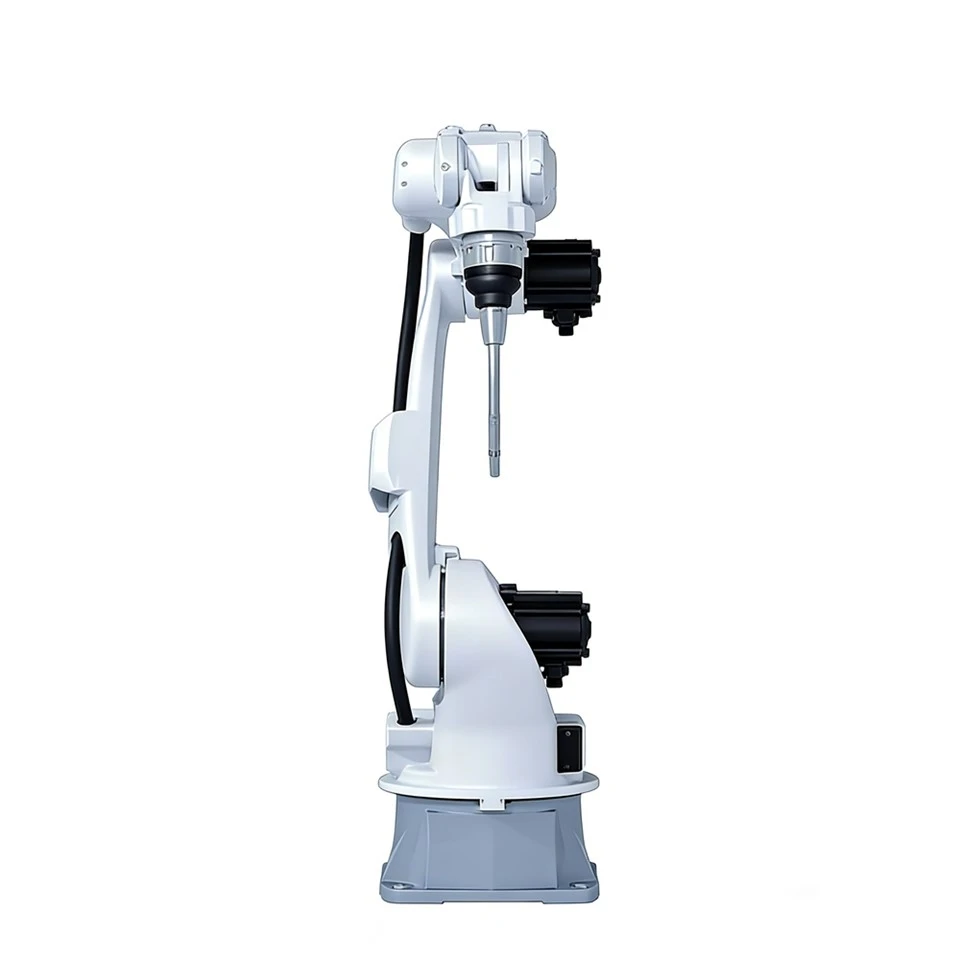
Application: Welding, handling, palletizing, assembly, etc.
Workpiece Specifications: Weight (kg), dimensions (L x W x H), material, surface characteristics, and handling orientation.
Tooling Specifications: Type (gripper, welding torch, suction tool), tool weight (kg), dimensions, center of gravity, and utility connections.
Working Envelope: Installation position, pickup/drop-off points, machine access area, fixture/conveyor positions, and maximum required reach.
Production Requirements: Target cycle time (sec/cycle), operating hours, parts per hour, shifts, and required availability.
Integration & Control: PLC interface, communication protocols, digital I/O, safety signals, and vision interface requirements.
Safety Concept: Cell-specific safeguarding requirements and regulatory compliance standards.
Project Scope: Initial quantity and expected annual demand.

FAQ
As one of the most professional industrial robot manufacturers and suppliers in China, we're featured by quality products and good service. Please rest assured to wholesale bulk customized industrial robot from our factory. For pricelist and quotation, contact us now.
Welding Robot, Mobile Welding Robot, ARC2010 Welding Robot