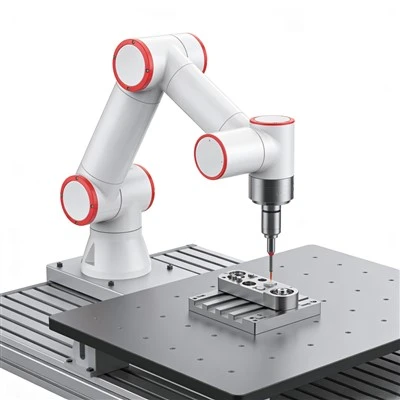

Robot System: Application-Specific Robotic Automation for Production Lines
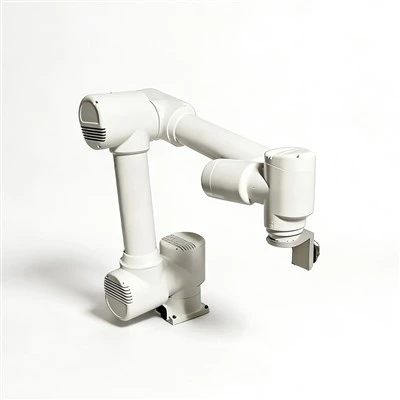
A robot system is more than a standalone robot arm. It combines the robot, controller, end-of-arm tooling, safety equipment, sensors, software, and process equipment required to perform a defined manufacturing operation.
The right system depends on the workpiece, process, cycle time, payload, reach, positioning requirements, production volume, and existing line architecture.
Our Robot System solutions are configured around the actual production task rather than a fixed robot specification. System scope can include robot selection, tooling, sensing, safety, controls, and line integration according to the application.
Typical applications include robotic welding, machine tending, palletizing, material handling, pick and place, assembly, packaging, and inspection.
-
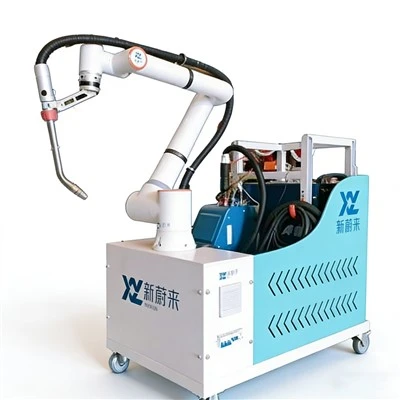
![Portable Welding Cobot Systems]() Portable Welding Cobot SystemsPortable Welding Cobot Systems are intelligent welding solutions designed for modern welding operations. They integrate collaborative robots, welding equipment, and control functions to support a...view more
Portable Welding Cobot SystemsPortable Welding Cobot Systems are intelligent welding solutions designed for modern welding operations. They integrate collaborative robots, welding equipment, and control functions to support a...view more -
![Portable Welding Robot System]() Portable Welding Robot SystemPortable Welding Robot System is a cutting-edge intelligent welding solution that breaks through the limitations of traditional fixed welding equipment. Integrating lightweight portability,...view more
Portable Welding Robot SystemPortable Welding Robot System is a cutting-edge intelligent welding solution that breaks through the limitations of traditional fixed welding equipment. Integrating lightweight portability,...view more -
![Portable Robotic Welding System]() Portable Robotic Welding SystemThe Portable Robotic Welding System is a flexible and intelligent welding equipment for industrial sites, focusing on portability, flexibility, stability and ease of use. It is specially designed...view more
Portable Robotic Welding SystemThe Portable Robotic Welding System is a flexible and intelligent welding equipment for industrial sites, focusing on portability, flexibility, stability and ease of use. It is specially designed...view more -
![No-code Welding Robot System]() No-code Welding Robot SystemThe No-code Welding Robot System is a new generation of portable intelligent welding equipment featuring zero programming and easy operation. It completely eliminates the programming barrier of...view more
No-code Welding Robot SystemThe No-code Welding Robot System is a new generation of portable intelligent welding equipment featuring zero programming and easy operation. It completely eliminates the programming barrier of...view more


What a Robot System Includes
A production-ready robot cell normally consists of several coordinated elements:
|
System Element |
Typical Function |
|
Industrial Robot |
Provides programmed multi-axis motion. |
|
Robot Controller |
Controls robot movement, programs, and process sequences. |
|
End-of-Arm Tooling |
Grips, welds, handles, dispenses, or processes the workpiece. |
|
Sensors |
Detect part position, presence, or process conditions. |
|
Vision System |
Locates or identifies parts where fixed positioning is insufficient. |
|
PLC / Control System |
Coordinates the robot with machines, conveyors, and auxiliary equipment. |
|
Safety System |
Provides guarding, interlocks, scanners, or other required protective functions in compliance with ISO 10218. |
|
Process Equipment |
Performs the actual manufacturing operation. |
|
HMI |
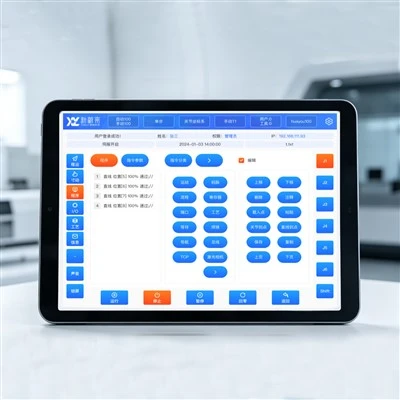
Provides operator controls, status information, and fault diagnostics. |
|
Communication Interface |
Connects the robot cell with upstream and downstream equipment. |
Select the Robot System Around the Process
A successful robot system begins with a rigorous application specification:
Workpiece
Define dimensions, weight, material, surface characteristics, gripping points, part variation, and loading orientation. These dictate payload, tooling, sensing, and fixture design.
Robot Motion
Evaluate payload capacity, reach, axis count, mounting position, working envelope, repeatability, and speed.
Note: The robot must support the combined weight of both the tool and the workpiece.
Production Requirements
Analyze cycle time, volume, shift hours, product variants, changeover frequency, and line synchronization.
Note: Throughput depends on total cell dynamics—including tool motion, loading, processing, and transfer times—not just robot speed.
Integration
Ensure seamless communication with CNC machines, conveyors, fixtures, sensors, PLCs, and MES environments. Control architecture and interfaces must be verified prior to system selection.
Robot System Configurations
Robotic Machine Tending
The robot loads and unloads CNC machines, presses, or other production equipment.
Typical Elements: Robot, part gripper, machine interface, part-present sensors, fixture, safety system, PLC / HMI.
Selection Criteria: Payload, reach, loading access, machine cycle time, and part changeover requirements.

Robotic Welding System
A welding system integrates the robot with the welding power source, torch, positioning equipment, tooling, and safety system.
Engineering Considerations: Workpiece geometry, welding process, torch configuration, positioning accuracy, fixture repeatability, weld access, welding cycle time, and fume extraction requirements.

Robotic Palletizing System
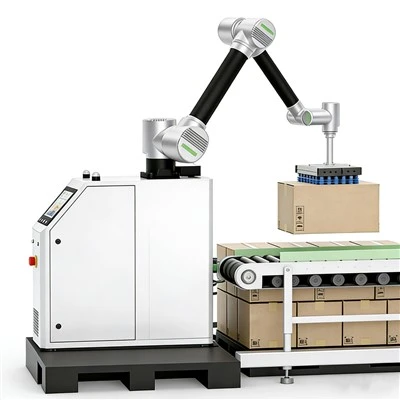
A palletizing cell combines the robot with a gripper, conveyor, pallet station, and product detection system.
Selection Criteria: Product dimensions, weight, case or bag configuration, stacking pattern, pallet dimensions, required throughput, and product changeover.

Robotic Pick-and-Place System
Pick-and-place applications require tight coordination between robot motion, part presentation, tooling, and sensing. Vision systems are integrated when parts are randomly oriented or their position cannot be controlled mechanically.

Robotic Assembly System
Assembly applications involve part handling, insertion, fastening, dispensing, or inspection.
Key Factors: Assembly sequence, component tolerance, required insertion force, part orientation, tooling, and inspection requirements.

Robot System vs. Robot Arm
A robot arm is merely one component of an automation solution, whereas a Robot System addresses the complete production task.
|
Robot Arm |
Robot System |
|
Robot mechanism only |
Robot + tooling + controls + safety + process equipment |
|
Focuses on motion |
Focuses on production operation |
|
Requires additional engineering |
Configured around the complete application |
|
Limited standalone function |
Fully integrated into the production process |
|
Purchased mainly by specification |
Purchased by application and performance requirements |
Key Technical Parameters for RFQ
When comparing Robot System suppliers, request technical information for the complete cell:
Robot: Payload, reach, axes, repeatability, mounting configuration, and controller.
Process: Cycle time, process accuracy, production capacity, product variation, and changeover procedure.
Tooling: Gripper type, maximum workpiece weight, gripping method, tool change requirements, and utility requirements (pneumatic/electrical).
Controls: PLC architecture, HMI, communication interfaces, I/O configuration, fault diagnostics, and recipe management.
Safety: Guarding, safety interlocks, scanners or light curtains, emergency-stop architecture, and operator access points aligned with safety standards.
System: Overall dimensions, utility requirements, installed power, air consumption, operating environment, and documentation scope.
Factory Integration and Acceptance
A Robot System must be evaluated as a production asset through a structured project lifecycle:
Application Review -> System Design -> Engineering -> Manufacturing -> Assembly -> Programming -> Testing -> FAT -> Shipment -> Installation -> Commissioning -> SAT
Factory Acceptance Test (FAT)
The FAT is based on agreed acceptance criteria covering robot operation, automatic cycle, part handling, tool operation, safety functions, machine communication, product changeover, cycle time, fault recovery, and operator functions. Clear criteria eliminate disputes regarding performance specifications.
Site Acceptance Test (SAT)
Following installation, SAT verifies the system under actual production conditions, confirming communication with existing equipment and operation with production workpieces.
Engineering Documentation
Deliverables include system layouts, electrical/pneumatic diagrams, robot and PLC programs, HMI configurations, I/O lists, component lists, operating instructions, maintenance guides, safety documentation, spare parts lists, and troubleshooting procedures.
FAQ
As one of the most professional robot system manufacturers and suppliers in China, we're featured by quality products and good service. Please rest assured to wholesale bulk customized robot system from our factory. For pricelist and quotation, contact us now.
Portable Robotic Welding System, robot system, Portable Welding Robot System