
Six-Axis Collaborative Robot Selection and Procurement Guide
Introduction to Six-Axis Collaborative Robots for Flexible Industrial Automation
A six-axis collaborative robot provides six degrees of freedom for handling, assembly, machine tending, inspection, dispensing, packaging, welding, and other automation tasks that require flexible tool positioning.
Typically featuring a payload range from 3 kg to 20 kg and a positional repeatability generally between plus or minus 0.02 mm and plus or minus 0.1 mm, the six-joint articulated structure allows the robot to approach a workpiece from different directions and control tool orientation throughout the working path. This makes a six-axis cobot suitable for applications where a fixed-axis robot or simpler motion platform cannot provide the required access or orientation.
For industrial buyers, robot selection should be based on the complete application rather than payload alone. Reach, repeatability, wrist orientation, cycle time, tooling weight, communication interfaces, safety functions, and integration requirements all affect whether a robot is suitable for production.
-
![Energy Saving CR620 Collaborative Robot]() Energy Saving CR620 Collaborative RobotEnergy Saving CR620 Collaborative Robot adopts energy-efficient motor drives. It consumes less power than traditional robotic equipment and effectively cuts electricity costs during long-term...view more
Energy Saving CR620 Collaborative RobotEnergy Saving CR620 Collaborative Robot adopts energy-efficient motor drives. It consumes less power than traditional robotic equipment and effectively cuts electricity costs during long-term...view more -
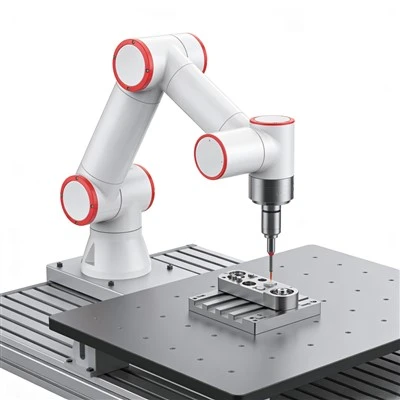
![CR620 Collaborative Robot]() CR620 Collaborative RobotThe CR620 Collaborative Robot is a next-generation 6-axis collaborative robotic arm engineered for high precision, compact installation, and safe human-robot collaboration. Built for small-space...view more
CR620 Collaborative RobotThe CR620 Collaborative Robot is a next-generation 6-axis collaborative robotic arm engineered for high precision, compact installation, and safe human-robot collaboration. Built for small-space...view more -
![CR920 Collaborative Robot]() CR920 Collaborative RobotCR920 Collaborative Robot is a new-generation 6-axis collaborative robot built on human-machine collaboration technology, designed for high-precision and high-flexibility industrial scenarios.view more
CR920 Collaborative RobotCR920 Collaborative Robot is a new-generation 6-axis collaborative robot built on human-machine collaboration technology, designed for high-precision and high-flexibility industrial scenarios.view more -
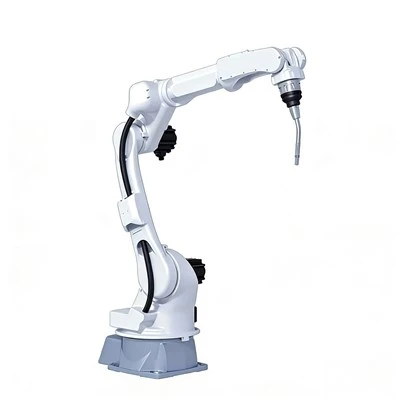
![CR1300 Collaborative Robot]() CR1300 Collaborative RobotThe CR1300 Collaborative Robot is an advanced 6-axis collaborative robotic arm designed to address the growing demand for long-reach, high-precision automation in large-scale manufacturing...view more
CR1300 Collaborative RobotThe CR1300 Collaborative Robot is an advanced 6-axis collaborative robotic arm designed to address the growing demand for long-reach, high-precision automation in large-scale manufacturing...view more -
![CR1400 Collaborative Robot]() CR1400 Collaborative RobotAs a new generation of high-performance collaborative robot, the CR1400 Collaborative Robot breaks through the performance limitations of traditional collaborative robots, integrating...view more
CR1400 Collaborative RobotAs a new generation of high-performance collaborative robot, the CR1400 Collaborative Robot breaks through the performance limitations of traditional collaborative robots, integrating...view more -
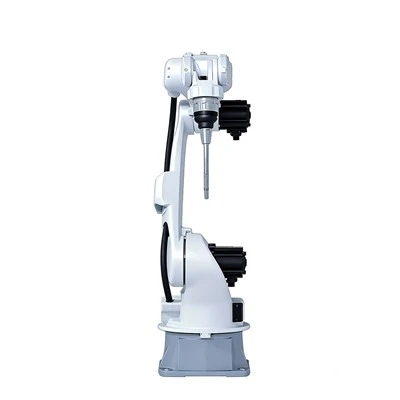
![CR1600 Collaborative Robot]() CR1600 Collaborative RobotThe CR1600 Collaborative Robot is a cutting-edge 6-axis collaborative robotic arm engineered to redefine the boundaries of large-scale, heavy-duty industrial automation.view more
CR1600 Collaborative RobotThe CR1600 Collaborative Robot is a cutting-edge 6-axis collaborative robotic arm engineered to redefine the boundaries of large-scale, heavy-duty industrial automation.view more


Six-Axis Collaborative Robot Applications
Machine Tending
A six-axis cobot can load and unload CNC machines, transfer parts between process stages, and handle workpieces around machine fixtures. Six-axis movement is useful when the part must be approached from different directions or rotated before insertion.
Key checks: Workpiece weight, gripper weight, machine door access, fixture position, loading orientation, required cycle time, CNC communication, and part presentation.
Assembly
Assembly operations often require the tool to approach components from different angles, supporting component insertion, part positioning, screwdriving, press-fit operations, component handling, and subassembly transfer.
Key checks: Positional repeatability, tool orientation, force requirements, and access around the assembly fixture.
Pick and Place
For variable part handling, six-axis movement provides greater freedom to rotate components before placement.
Key checks: Part dimensions, part weight, gripper type, pick position, placement orientation, conveyor speed, and required cycle time.
Welding
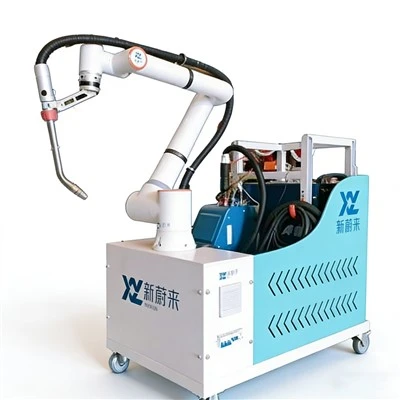
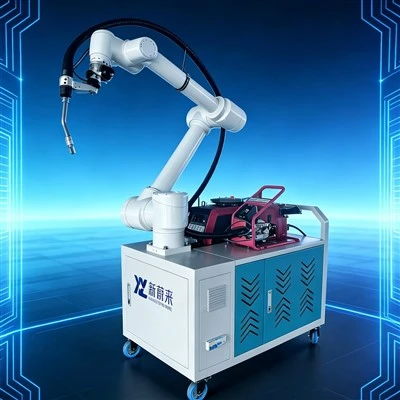
Six-axis robotic movement allows the welding tool to maintain a controlled orientation along the work path. The robot's payload must include the complete tooling package rather than the workpiece alone, evaluating the robot alongside the welding equipment, torch, cable package, workpiece, fixture, and process requirements.
Dispensing and Adhesive Application
Dispensing processes may require a controlled tool angle and continuous movement along a defined path. Relevant factors include path accuracy, repeatability, tool weight, hose and cable routing, process speed, workpiece geometry, and controller functions.
Inspection and Vision-Guided Handling
A six-axis robot can position a camera, sensor or inspection tool at different angles around a component for dimensional inspection, surface inspection, barcode reading, component verification, and sensor positioning. Vision hardware and software should be evaluated as part of the complete system.
Packaging and Material Handling
Six-axis cobots can handle products requiring changes in orientation before packing, transfer, or downstream processing. Selection should account for product weight, tooling weight, product presentation, required orientation, cycle time, reach, conveyor position, and packaging equipment interface.
Start With Payload: Calculate the complete moving load (Workpiece + Gripper + Tooling + Other End-of-Arm Equipment). Do not select a robot from workpiece weight alone. For dynamic applications, acceleration and motion characteristics also need to be considered.
Check Reach Against the Actual Work Envelope: Map the actual positions of pick points, place points, machine access points, fixtures, conveyors, tool change positions, and inspection positions to check whether the robot can reach each position with the required wrist orientation.
Match Repeatability to the Process: Compare the robot specification with the actual process tolerance, noting that material-handling tasks differ significantly from precision assembly, screwdriving, dispensing, or inspection.
Check Cycle Time: Consider the complete motion cycle (pick, lift, travel, rotate, approach, place, return) rather than maximum joint speed alone.
Confirm Tool and Flange Compatibility: Confirm mechanical flanges, tool mounting, end-effector weight, tool center point (TCP), tool I/O, pneumatic/electrical requirements, and cable routing before ordering.

Integration Requirements
PLC and Factory Equipment:
The robot controller may need to exchange signals with PLCs, CNC machines, conveyors, sensors, vision systems, and safety systems. Request a clear list of available communication interfaces and supported industrial protocols.
End-of-Arm Tooling (EOAT):
Common end effectors include parallel grippers, vacuum grippers, magnetic grippers, screwdriving tools, welding torches, and inspection cameras. Tool weight, center of gravity, and cable routing must be factored in.
Vision Integration:
Vision can be used for part location, orientation detection, presence/absence inspection, identification, and pick-point correction. Define available communication and triggering methods with the supplier.
Collaborative Robot Safety and Standards
"Collaborative" does not mean "safe for every application." The final application can introduce hazards through sharp workpieces, cutting tools, welding equipment, heavy parts, pinch points, high-temperature components, and high-speed tooling.
Safety evaluations should cover the complete robot application referencing established industrial safety standards. Procurement and engineering teams should review application-specific risk assessments, request relevant technical documentation, and determine which safety functions are integrated into the controller versus external safeguarding measures.
FAQ
As one of the most professional six-axis collaborative robot manufacturers and suppliers in China, we're featured by quality products and good service. Please rest assured to wholesale bulk customized six-axis collaborative robot from our factory. For pricelist and quotation, contact us now.
CR920 Collaborative Robot, CR1600 Collaborative Robot, CR1300 Collaborative Robot