
Collaborative Palletizing Robot: The Definitive Guide to Automated End-of-Line Handling
A collaborative palletizing robot automates repetitive palletizing tasks such as transferring cartons, boxes, bags, and packaged products from a production or packaging line onto pallets.
For any successful palletizing project, the robot arm is only one part of the equation. Product weight, gripper weight, reach, pallet dimensions, stacking height, cycle time, product variation, and line integration all dictate whether a system can perform reliably.
-
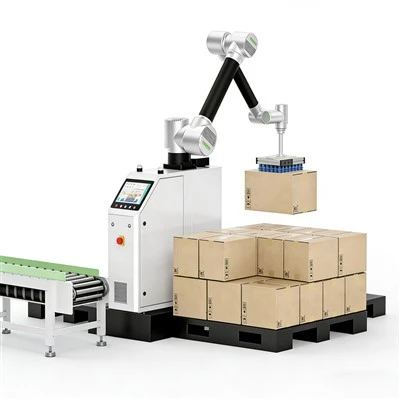
![Palletizing Collaborative Robot]() Palletizing Collaborative RobotThe Palletizing Collaborative Robot is an intelligent piece of equipment designed for material handling and automated palletizing operations. It combines a robotic arm, control system, end-of-arm...view more
Palletizing Collaborative RobotThe Palletizing Collaborative Robot is an intelligent piece of equipment designed for material handling and automated palletizing operations. It combines a robotic arm, control system, end-of-arm...view more -
![Collaborative Robot Palletizer Systems]() Collaborative Robot Palletizer SystemsCollaborative Robot Palletizer Systems are intelligent automation solutions designed for material handling and palletizing operations in manufacturing, packaging, and warehousing environments....view more
Collaborative Robot Palletizer SystemsCollaborative Robot Palletizer Systems are intelligent automation solutions designed for material handling and palletizing operations in manufacturing, packaging, and warehousing environments....view more -
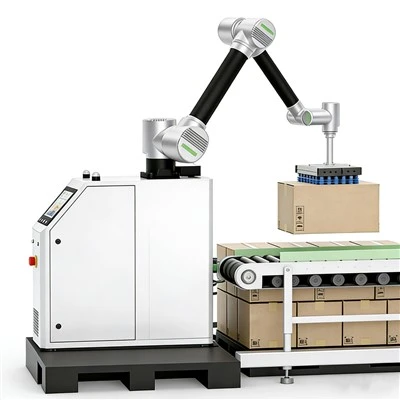
![Collaborative Cobot Palletizer]() Collaborative Cobot PalletizerTraditional palletizing equipment requires independent safety fencing and occupies large areas of workshop space, while collaborative models operate without isolation barriers to lower site costs....view more
Collaborative Cobot PalletizerTraditional palletizing equipment requires independent safety fencing and occupies large areas of workshop space, while collaborative models operate without isolation barriers to lower site costs....view more -
![Collaborative Robotic Palletizer]() Collaborative Robotic PalletizerThe core advantages of adopting the Collaborative Robotic Palletizer lie in flexible production and low implementation thresholds. Built-in safety sensors eliminate the demand for isolated...view more
Collaborative Robotic PalletizerThe core advantages of adopting the Collaborative Robotic Palletizer lie in flexible production and low implementation thresholds. Built-in safety sensors eliminate the demand for isolated...view more -
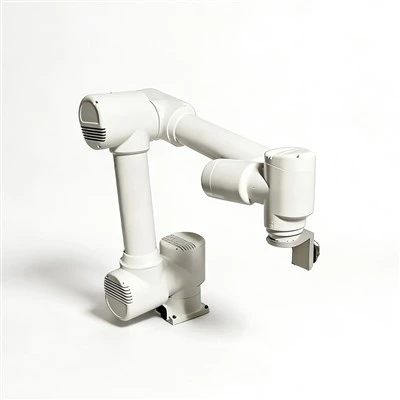
![CR30 Collaborative Palletizing Robot]() CR30 Collaborative Palletizing RobotThe CR30 Collaborative Palletizing Robot is a collaborative industrial robot designed for efficient automated material handling and palletizing. With a 30KG payload capacity and a 1900mm working...view more
CR30 Collaborative Palletizing RobotThe CR30 Collaborative Palletizing Robot is a collaborative industrial robot designed for efficient automated material handling and palletizing. With a 30KG payload capacity and a 1900mm working...view more -
![CR40 Collaborative Palletizing Robot]() CR40 Collaborative Palletizing RobotThe CR40 Collaborative Palletizing Robot is a high-performance 6-axis collaborative robotic arm specifically developed for heavy-duty automated palletizing tasks in industrial production lines,...view more
CR40 Collaborative Palletizing RobotThe CR40 Collaborative Palletizing Robot is a high-performance 6-axis collaborative robotic arm specifically developed for heavy-duty automated palletizing tasks in industrial production lines,...view more -
![CR50 Collaborative Palletizing Robot]() CR50 Collaborative Palletizing RobotThe CR50 Collaborative Palletizing Robot is a top-tier 6-axis collaborative robotic arm specifically developed for super heavy-duty automated palletizing tasks in industrial production lines,...view more
CR50 Collaborative Palletizing RobotThe CR50 Collaborative Palletizing Robot is a top-tier 6-axis collaborative robotic arm specifically developed for super heavy-duty automated palletizing tasks in industrial production lines,...view more -
![Palletizing Robot]() Palletizing RobotThe Palletizing Robot is a professional 6-axis collaborative robotic arm specifically developed for automated palletizing tasks in industrial production lines, integrating high load capacity,...view more
Palletizing RobotThe Palletizing Robot is a professional 6-axis collaborative robotic arm specifically developed for automated palletizing tasks in industrial production lines, integrating high load capacity,...view more


What Is A Collaborative Palletizing Robot?
A collaborative palletizing robot is a cobot-based automation system designed to pick products from an infeed position and place them onto pallets according to pre-programmed stacking configurations.
A standard system integration typically comprises:
Collaborative robot arm and controller
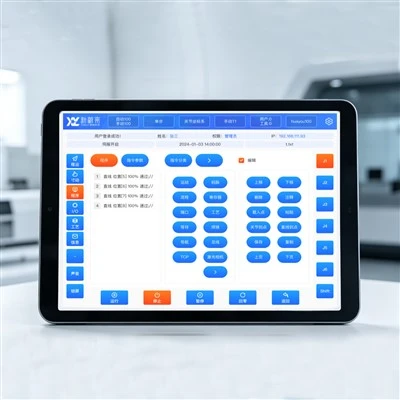
Palletizing software or recipe management interface
End-of-arm tooling (EOAT) or specialized gripper
Product infeed and outfeed conveyors
Pallet positioning and detection areas
Integrated safety components and sensors
Plant-level PLC and line-control interfaces
The exact configuration is always tailored to the product type, pallet format, required throughput, and factory floor constraints. Performance depends entirely on the integrated application, not the robot arm in isolation.
When Does a Cobot Palletizer Make Sense?
Cobot-based palletizing is worth evaluating when a production line involves repetitive manual stacking and requires steady, reliable material handling. Typical deployment scenarios include:
Repetitive carton, case, or box palletizing
Bagged and flexible-packaged product handling
End-of-line packaging optimization
Frequent operator intervention points at manual stations
Multi-product or multi-SKU production lines
Production environments with regular product changeovers
Space-constrained factory floors
Low-to-medium-volume setups requiring flexible automation
A collaborative robot is particularly advantageous when production requirements shift frequently and the system must handle multiple product sizes or layer patterns. However, it should not be chosen merely because it is labeled "collaborative"—success relies on precise payload, reach, throughput, and safety validation.
Ask suppliers to state the exact operational conditions behind their cycle-time estimates (e.g., pick/place distance, pattern complexity, and payload weight) to ensure apples-to-apples comparisons.
Robot Payload
One of the most common pitfalls in robot selection is looking solely at product weight. Required payload includes the product, the end-of-arm tooling, and a safety handling margin.
When comparing supplier quotes, always verify if the stated payload applies to the product only, the product plus gripper, or specific wrist/reach orientations.
Reach and Working Envelope
The robot must physically reach both the infeed pick position and every corner of the maximum pallet stack. Watch out for:
- Pallets positioned alongside conveyors requiring extended reach.
- Placing products precisely near outer pallet edges.
- Decreasing effective reach as the gripper length increases.
- Variable reach requirements as stacking height builds up.
Product Weight and Dimensions
Avoid generic descriptions like "medium box." Provide exact engineering specifications:
- Product length, width, and height
- Precise weight and center of gravity (if asymmetrical)
- Packaging material (e.g., corrugated cardboard, shrink wrap, woven plastic)
- Surface characteristics (porous, slippery, or deformable)
- Product rigidity and permitted gripping zones


Gripper Selection (EOAT)
The end-of-arm tooling is just as critical as the robot itself. Common configurations include:
- Vacuum gripping: Best for sealed rigid cartons and smooth surfaces.
- Mechanical or clamp gripping: Ideal for open-top boxes, heavy bundles, or rigid cases.
- Fork-style handling: Commonly used for specific bottom-supported layers or bags.
Pallet Dimensions and Stacking Height
Pallet geometry drives motion planning. Ensure you map out:
- Pallet length, width, and maximum stacking height
- Number of layers and products per layer
- Interlocking or column stacking pallet patterns
- Handling of multiple pallet formats (if applicable)
Cycle Time and Throughput
True throughput is a composite of a full multi-step cycle:
Product Detection -> Pick -> Robot Motion -> Placement -> Release -> Return -> Next Acquisition
Safety, Compliance, and Integration
Safety Compliance:
"Collaborative" does not automatically mean zero safety guarding. Risk assessments must evaluate robot speed, payload, sharp edges on packaging, and layout hazards. Always request applicable regional compliance documentation (e.g., CE conformity for Europe, ANSI/RIA for North America).
Line Integration:
Ensure seamless communication with existing downstream/upstream equipment. Key integration points include conveyor start/stop handshakes, pallet-present sensors, emergency-stop loops, and recipe selection via the plant PLC.
FAQ
As one of the most professional collaborative palletizing robot manufacturers and suppliers in China, we're featured by quality products and good service. Please rest assured to wholesale bulk customized collaborative palletizing robot from our factory. For pricelist and quotation, contact us now.
CR30 Collaborative Palletizing Robot, CR50 Collaborative Palletizing Robot, collaborative palletizing robot