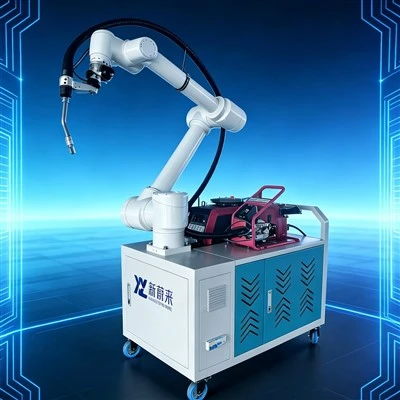


Among automatic industrial equipment, the Palletizing Robot belongs to the category with minimum failure rate and highest stability. Compared with manipulators, sorting equipment and packaging machines, it features simplified mechanical design, mature operation logic and strong working‑condition adaptability. Mass‑production technology has reached a high level, which guarantees excellent long‑term running reliability.
Its low failure rate originates from simplified structural design. The Palletizing Robot consists of mechanical arm, servo drive unit, control system and gripper‑sensing assembly without complicated precision transmission structures. The small quantity of moving parts lowers risks of mechanical abrasion and jamming. Highly‑sealed integrated circuits and control modules resist interference from workshop dust, slight vibration and temperature fluctuation. Probabilities of short‑circuit and component‑damage are reduced for complicated industrial working conditions.
Most failures are minor and easy to resolve instead of severe breakdowns. Over 95 % of malfunctions in daily operation are trivial problems such as signal failure due to dust accumulation on sensor surfaces, slight air‑pipe leakage, worn gripper rubber pads and minor parameter drift. Operators can restore normal operation quickly through simple cleaning, fastening and parameter fine‑tuning without specialized maintenance personnel, avoiding long‑time assembly‑line shutdown.
Core‑component failure probability is extremely low. Industrial‑grade high‑specification materials are adopted for servo motors, reducers, PLC control units and mechanical‑arm main bodies, which pass strict factory tests for high wear‑resistance, impact‑resistance and anti‑aging performance. Under standardized operation and regular maintenance, core components can run fault‑free for 8‑10 years. The overall annual comprehensive failure rate stays under 1 % with continuous trouble‑free runtime reaching 30 000‑50 000 hours, outperforming many other automatic devices.
Most malfunctions stem from improper human operation and insufficient maintenance rather than inherent quality defects. Typical human‑caused faults include over‑load grabbing, arbitrary system‑parameter modification, neglected sensor cleaning and operation without protection under harsh environments. Strict compliance with operating specifications together with daily‑cleaning and periodic‑maintenance routines ensures stable long‑term performance. Built‑in fault alarm and error‑code functions locate abnormal positions rapidly to shorten repair time even when breakdowns emerge. Prolonged production‑line halt can be avoided to satisfy demands of continuous industrial manufacturing.