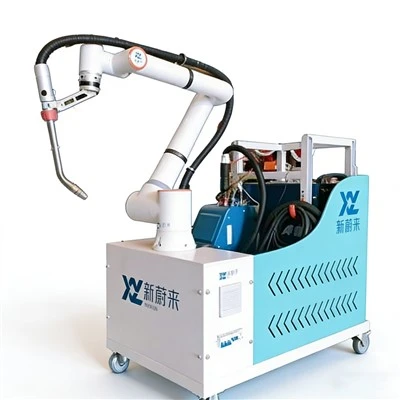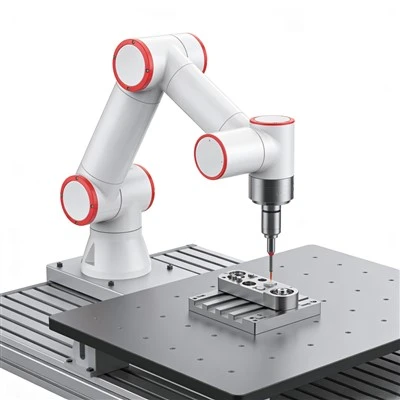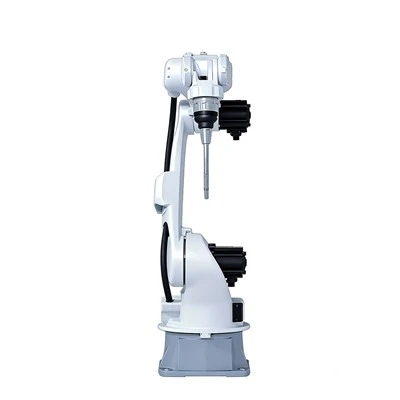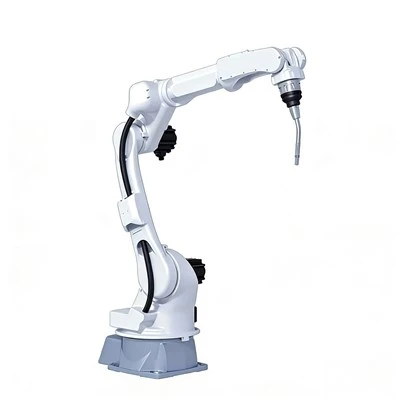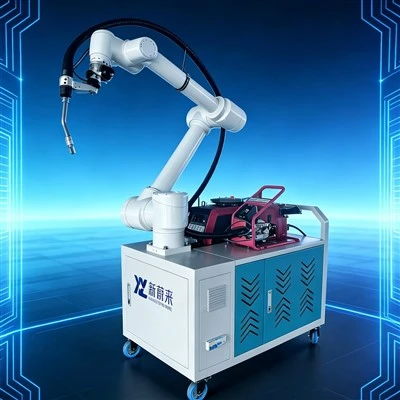

Featuring strong compatibility and wide applicability, the Palletizing Robot has been extensively deployed across light industry, heavy industry, logistics warehousing and other industrial sectors for palletizing, handling and stacking of most regular solid materials. It satisfies production requirements with different production scales, operating environments and material specifications and represents one of the most widely implemented automatic industrial devices.
From the perspective of industrial sectors, its application scenarios are diversified. In the food and beverage industry, it processes boxed and bottled goods such as mineral water, beverages, gift packages, dairy products and frozen food for end‑of‑line automatic palletizing and warehousing. It solves low‑efficiency and error‑prone drawbacks of manual palletizing for fast‑moving‑consumer‑goods high‑speed assembly lines. In the grain and feed industry, it stacks bagged rice, flour, feed and grain particles for large‑volume warehousing in grain depots and feed mills.
In chemical and building‑material sectors, it works with bagged or barreled goods including chemical fertilizer, cement, dry‑mixed mortar, paint buckets and plastic pellets. Working conditions are usually dusty and labor‑intensive for human workers, while robots deliver stable palletizing performance under harsh circumstances. Home‑appliance, hardware and electronics industries also adopt the Palletizing Robot for regular‑shaped finished‑goods such as small household appliances, hardware components and electronic cartons to achieve neat stacking and support standardized warehouse management. In logistics warehousing, it performs sorting, palletizing and outbound stacking for parcels and turnover boxes to cooperate with intelligent warehouse assembly lines.
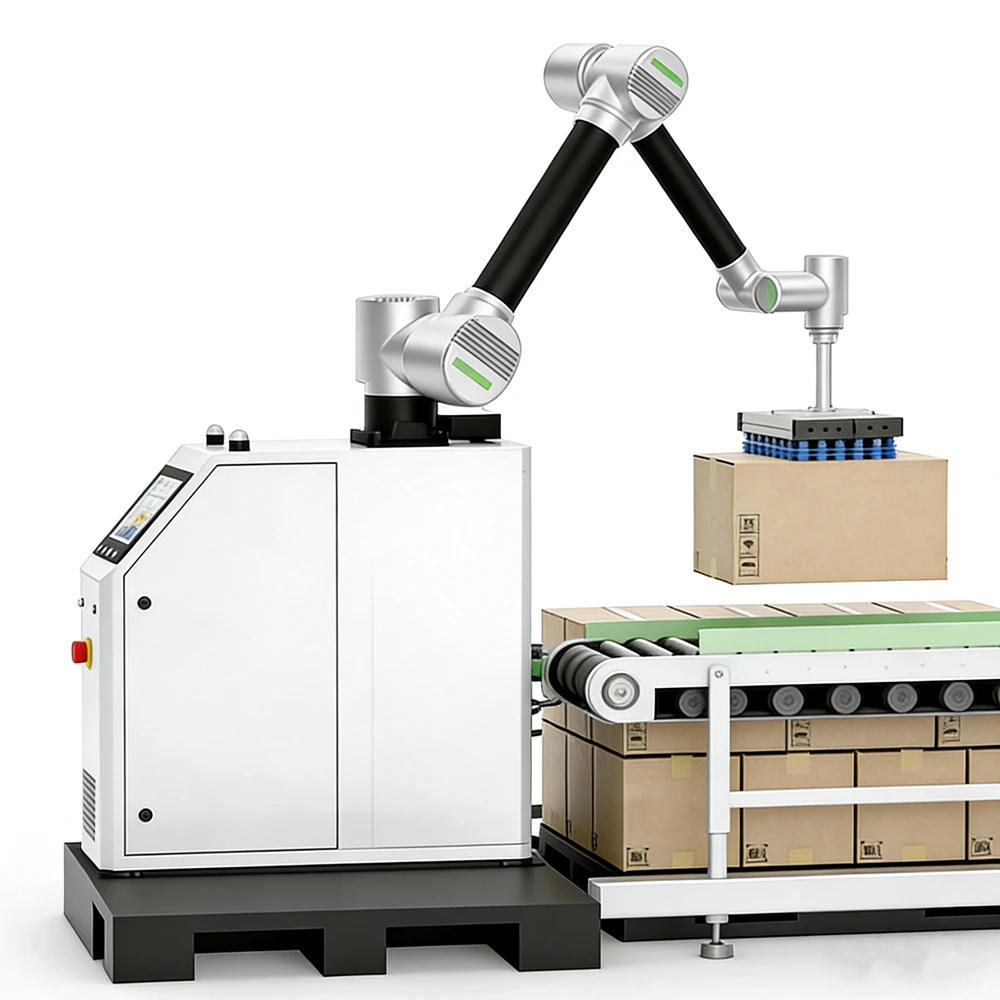
In terms of material compatibility, the equipment delivers outstanding versatility. It adapts to goods weighing from 1 kg to 800 kg. Light‑duty applications cover snacks and small parcels while heavy‑duty modes process cement and large cabinet‑style equipment. Supported material forms include regular cartons, plastic boxes, woven bags, packing sacks, metal barrels, plastic barrels and turnover frames. Only end‑of‑arm grippers need replacement instead of main‑equipment modification. Slightly irregular soft‑packed materials can also be handled by adjusting gripper clamping force and optimizing palletizing programs.
Flexible compatibility is reflected in scenario and production‑capacity adaptation. It operates in standard indoor workshops, dusty workshops and normal‑temperature industrial environments with 24‑hour continuous operation free from human‑schedule restrictions. For production capacity, it serves low‑speed assembly lines of small‑scale factories for small‑batch multi‑variety production. Meanwhile it fits large‑scale high‑speed industrial lines with palletizing capacity reaching 800‑1200 cases or bags per hour. Multiple working modes are supported, including low‑position feeding, high‑position palletizing, floor stacking and pallet‑based stacking to cover nearly all industrial palletizing scenarios.