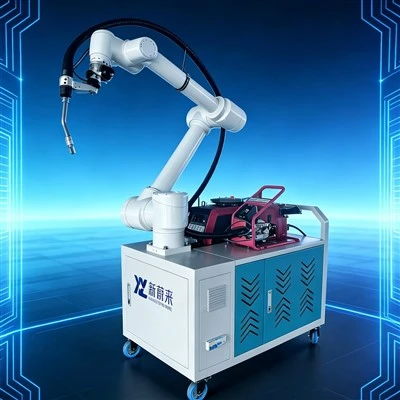
According to practical industrial application data, the overall maintenance cost of the Palletizing Robot ranks at the medium‑low level among automatic industrial equipment. Characterized by small‑amount routine maintenance and low long‑term wear‑and‑tear loss, its annual operation and maintenance cost is far lower than that of manual palletizing and other automatic handling and packaging equipment, making it suitable for long‑term large‑scale production of enterprises. Its maintenance expenditure falls into three categories: daily upkeep, periodic comprehensive maintenance and breakdown repair, featuring controllable overall expenses and high cost‑performance.
Daily basic maintenance generates barely high costs and can be implemented with low‑threshold operation. Before and after daily shifts, operators only need simple cleaning to remove dust and material debris on mechanical arms, grippers and sensor surfaces so as to prevent accuracy degradation caused by impurities. Daily inspections cover loose or damaged cables, air pipes and oil pipes as well as screw fastening. Lubricants and grease are applied to moving components such as transmission bearings, gears and sliding rails on a regular basis. These maintenance supplies are cheap with low consumption. Each routine maintenance costs merely several to dozens of RMB. Ordinary operators can finish these tasks without professional on‑site technicians, which greatly cuts labor costs for equipment upkeep.
Periodic in‑depth maintenance brings fixed small‑amount expenditures with long service intervals. General industrial standards suggest thorough inspection every six months or one year to check operating conditions of core parts including servo motors, reducers, control systems and sensors. Positioning accuracy calibration and potential fault elimination are also included. Enterprises can carry out inspection independently or purchase manufacturer on‑site services. Self‑maintenance only requires basic testing tools with no extra charges. Manufacturer on‑site service costs several hundred to more than one thousand RMB each time and is needed merely once or twice per year. Core components such as servo motors and control systems can work for 8‑10 years without frequent replacement.
Wearing‑part replacement is low‑cost with long replacement cycles. Vulnerable components are limited to small accessories including gripper rubber pads, sealing rings, bearings and air pipes. Each accessory is inexpensive and needs replacement every 1‑3 years. Annual average cost for wearing‑part replacement stays below one thousand RMB. In contrast, manual palletizing brings hundreds‑of‑thousands RMB of annual labor expenditure together with implicit losses such as material damage, pallet collapse and safety accidents. Robot maintenance cost is almost negligible.
Noticeable large‑sum expenditure may occur when partial aged core components require replacement after over eight years of service. Nevertheless, considerable economic benefits have been created by the equipment in this period to fully cover maintenance expenses. To sum up, after initial investment, the Palletizing Robot maintains stable and low long‑term operation costs without hidden consumption, ranking it as a high‑cost‑performance automatic device in industrial production.

 English
- English
- Français
- Deutsch
- 日本語
- Italiano
- Español
- Português
- русский
- 한국어
- Malti
- Čeština
- O'zbek
- Latviešu
- magyar
- Việt Nam
- فارسی
- українська
- Bai Miaowen
- हिंदी
- Norsk
- Srbija jezik (latinica)
- Kreyòl Ayisyen
- עברית
- Ελληνικά
- dansk
- bosanski
- Türkçe
- اردو
- Lietuvių
- slovenščina
- Svenska
- ไทย
- íslenska
- Cymraeg
- Gaeilgenah Éireann
- hrvatski
- slovenčina
- România limbi
- Polski
- عربي
- Català
- Eesti
- Български
- Nederlands
- বাংলা
- Indonesia
- Melayu
- suomi