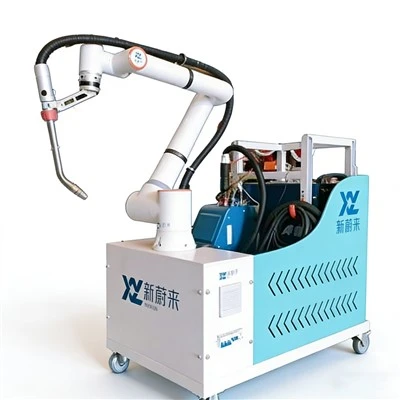

Industrial Welding Robots require regular maintenance, and proper maintenance is an important part of ensuring stable long-term operation. Although industrial robots are designed to perform continuous and repetitive production tasks, welding torches are exposed to high temperatures, welding spatter, and potential collisions during actual operation. At the same time, moving components, cables, and welding accessories may experience varying degrees of wear as operating time increases. Therefore, maintenance should not be limited to checking whether the robot is still running. Daily inspections and periodic maintenance should be carried out according to actual operating conditions. ABB notes that welding torches in robotic welding cells are exposed to heat, welding spatter, and possible collisions and therefore require regular cleaning, measurement, and TCP verification to maintain welding quality and accuracy.
Daily maintenance should begin with proper cleaning. Welding spatter generated during the welding process can accumulate on the welding torch, nozzle, and surrounding components. If it is not removed regularly, it may interfere with the welding process. Therefore, the welding torch and related components should be cleaned according to the actual welding frequency to remove accumulated spatter, welding residue, and other debris. The robot's working area should also be kept clean to prevent dust, metal particles, and other foreign matter from affecting normal operation.
The welding torch is one of the key components that requires attention during maintenance. Operators should regularly inspect the nozzle, conductive components, torch connections, and related consumables. If significant wear, blockage, deformation, or other abnormalities are found, they should be addressed promptly. For Industrial Welding Robots used for long periods of continuous production, the position of the welding torch should also be monitored. A collision, component replacement, or other event may change the position of the tool center point, which can affect the welding path and weld quality. Appropriate checks should therefore be performed whenever necessary.
The robot body and motion mechanisms also require regular inspection. During operation, operators should observe whether the robot moves smoothly and whether there are abnormal noises, irregular movements, positional deviations, or other unusual conditions. If the equipment develops abnormal vibration, unusual movements, or other noticeable changes from its normal operating state, the cause should be investigated promptly. Addressing potential problems at an early stage can help prevent minor issues from developing into failures that affect production.
Cables and hoses are another part of maintenance that can easily be overlooked. During continuous operation, the cables and hoses of an Industrial Welding Robot repeatedly bend and move. They should therefore be inspected regularly for wear, looseness, damage, or abnormal twisting. Welding-related connections should also be checked to ensure that they remain secure and do not interfere with normal welding operations.
Overall, Industrial Welding Robots require regular maintenance. Daily operation should include cleaning, welding torch inspection, cable and hose inspection, monitoring of robot movement, and checking of welding performance, along with periodic maintenance based on actual operating conditions. Proper maintenance helps keep the equipment running reliably, identify abnormalities at an early stage, and reduce welding quality fluctuations and production interruptions caused by changes in equipment condition.