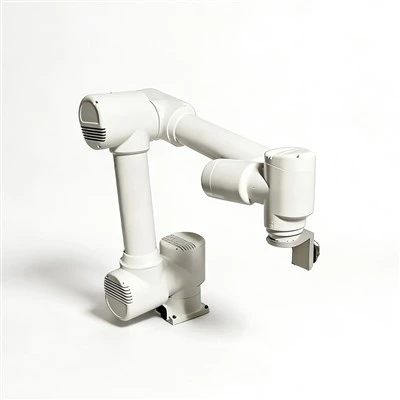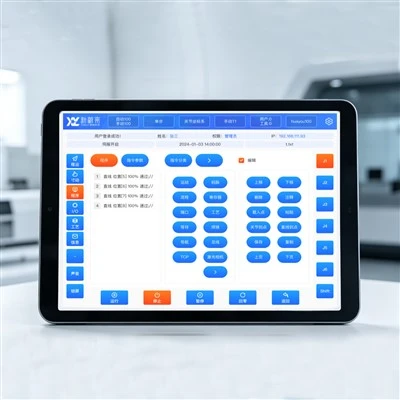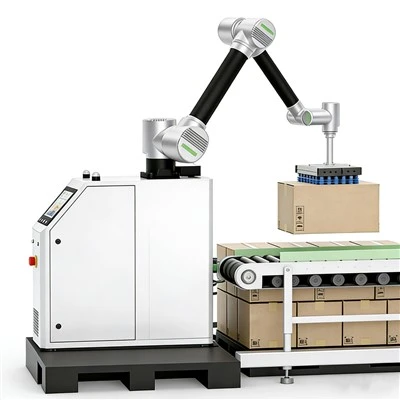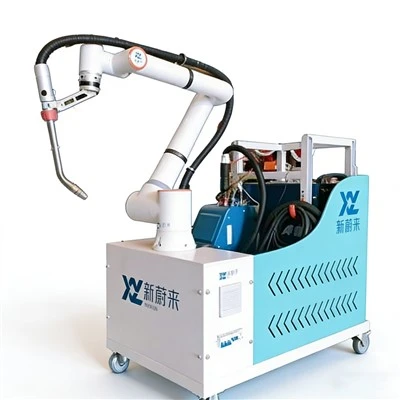


Collaborative Palletizing Robots feature strong flexibility and can be applied to a wide range of industrial handling scenarios. Whether in material transfer during manufacturing or product organization in warehouses, robots can perform corresponding tasks according to actual requirements and improve the level of handling automation.
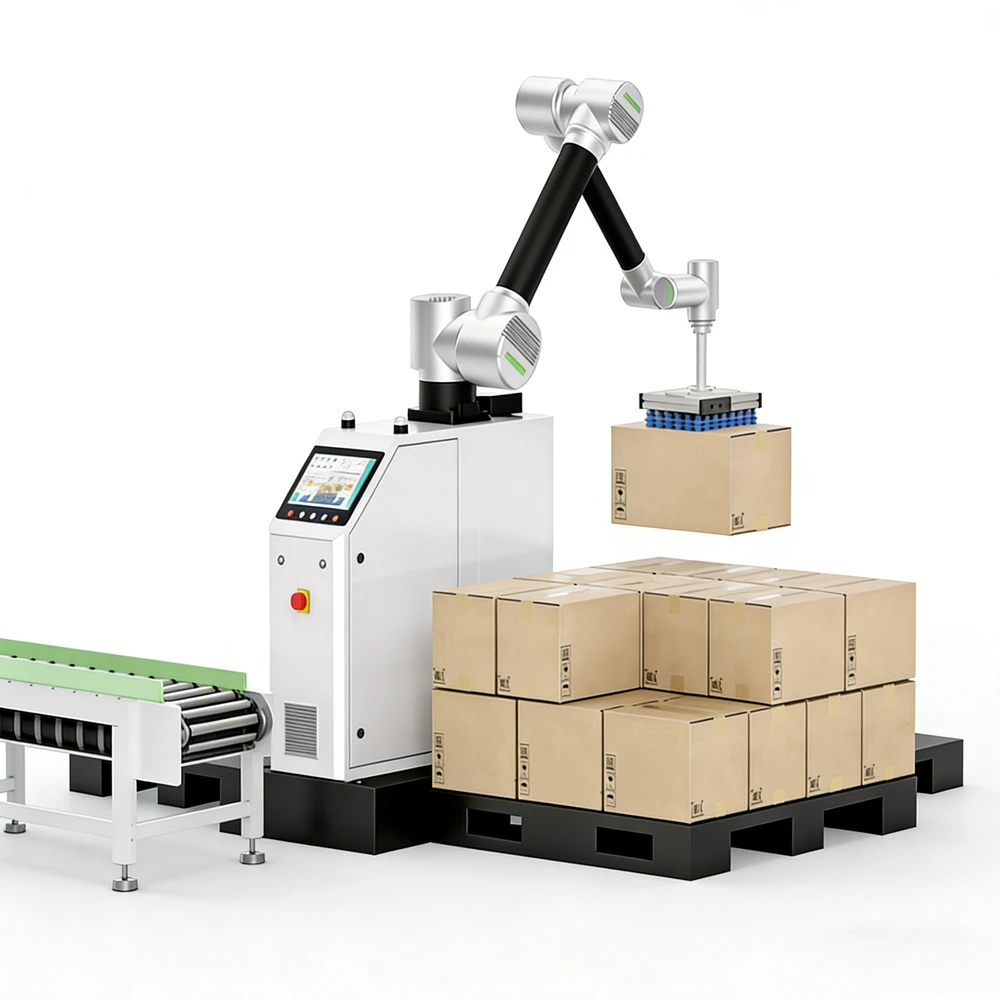
In production line end-of-line handling applications, Collaborative Palletizing Robots can transfer packaged products from conveyor systems and stack them according to preset patterns. For common materials such as cartons, bags, and packaged goods, robots can maintain stable operations, making subsequent transportation and storage more convenient.
In packaging and palletizing applications, Collaborative Palletizing Robots can adjust stacking methods according to different product characteristics. Enterprises can set different arrangement patterns through programming, allowing products to form more organized stacks, improving warehouse space utilization and facilitating later loading, unloading, and transportation.
In warehouse and logistics applications, Collaborative Palletizing Robots can participate in product arrangement, transfer, and sorting operations. When warehouses require frequent goods movement, robots can cooperate with conveyor systems or other automated equipment to achieve more efficient logistics management.
Furthermore, Collaborative Palletizing Robots can also be used for loading and unloading operations during manufacturing processes. In some industries, robots can assist workers in moving components, packaging materials, or semi-finished products, reducing repetitive manual operations and improving production continuity.
For production environments with limited space, Collaborative Palletizing Robots also have good adaptability. Due to their flexible structure, they can be adjusted according to site layouts without requiring major changes to existing production environments, making them suitable for automation upgrades in small and medium-sized enterprises.
Meanwhile, Collaborative Palletizing Robots can adapt to multi-product and small-batch production models. By adjusting program parameters, robots can quickly switch between different handling methods, meeting the flexible production requirements of modern manufacturing industries.
In summary, Collaborative Palletizing Robots have a wide range of applications, including production line handling, packaging palletizing, warehouse logistics, material transfer, and auxiliary loading and unloading. With the continuous development of automation technology, their application value in more industries and production environments will continue to increase.