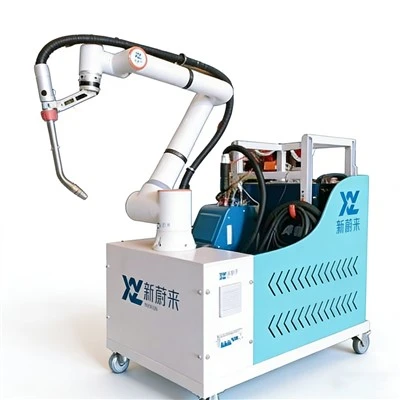

A Welding Collaborative Robot is subject to continuous movement, welding spatter, dust, and environmental conditions during long-term operation. Therefore, taking appropriate measures to reduce equipment wear is important. Reducing wear does not depend on a single measure. Instead, it requires proper management of daily cleaning, operation, the working environment, equipment condition, and maintenance practices.
First, the robot's working area should be kept clean. Welding operations can produce slag, metal particles, and fumes. If these contaminants accumulate around the equipment, they may enter moving areas or attach to relevant components, increasing contamination and wear during operation. Therefore, the area surrounding the Welding Collaborative Robot should be cleaned regularly, and debris generated during production should be removed promptly.
Welding spatter should also be removed in a timely manner. During welding, the torch and surrounding areas may be exposed to spatter. If spatter remains attached to relevant components for a long time, it can make cleaning more difficult and may interfere with normal equipment operation. Operators should therefore establish suitable cleaning intervals based on actual production conditions.
Proper operation can also help reduce equipment wear. Operators should follow the established workflow and avoid arbitrarily changing the robot's movements or performing unnecessary operations. In particular, during startup, shutdown, and task changes, operators should follow the appropriate procedures to avoid abnormal movements caused by improper operation.
Correct workpiece placement is equally important. If a workpiece is not positioned securely and correctly, the robot may encounter positional deviations during welding and may even experience unnecessary contact or collisions. Before starting a task, operators should confirm that the workpiece has been positioned correctly and check that there are no objects within the working area that could interfere with the robot.
The robot should also be prevented from operating under abnormal conditions for extended periods. If unusual sounds, unstable movements, unexpected pauses, or other abnormal conditions occur, the equipment should be inspected promptly. Allowing the robot to continue operating while an abnormal condition exists may place additional stress on related components and accelerate wear.
Regular inspections are another important way to reduce wear. Companies can establish routine inspection procedures based on actual operating conditions and pay attention to the condition of moving components, welding-related components, and connection areas. Identifying abnormalities at an early stage makes it possible to take appropriate action before a minor issue develops into a more significant equipment problem.
Necessary maintenance should also be performed according to the equipment's operating requirements. Components that require lubrication, cleaning, or other maintenance should be handled using the correct methods. Unsuitable materials or tools should not be used during maintenance, and untrained personnel should not disassemble internal components without authorization.
The working environment can also directly affect the equipment's long-term operating condition. If a Welding Collaborative Robot is continuously used in an environment with excessive dust, moisture, or contamination, cleaning and maintenance requirements may increase. Therefore, the working area should be kept as dry and clean as practical, with appropriate environmental management based on actual production conditions.
Proper workflow planning can further help reduce wear. The robot does not need to perform unnecessary movements as long as the welding task can be completed effectively. Where appropriate, unnecessary travel and repetitive movements should be minimized. A well-organized operating path allows the robot to move more smoothly and can help reduce unnecessary mechanical movement.
Overall, reducing wear on a Welding Collaborative Robot requires consistent operating and maintenance practices. By keeping the environment clean, positioning workpieces correctly, operating the robot properly, addressing abnormalities promptly, performing regular inspections, and carrying out appropriate maintenance, companies can reduce unnecessary equipment wear and create better conditions for long-term stable operation.