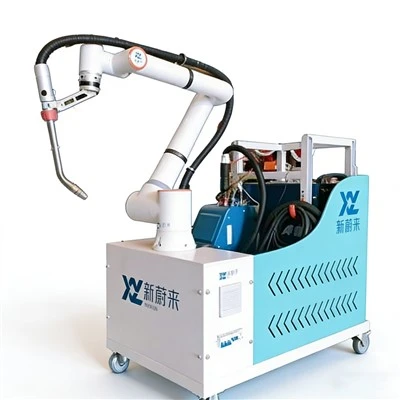

A Magnetic Welding Robot is able to move on metal surfaces mainly because of the magnetic attachment mechanism incorporated into its lower section or drive system. When the magnetic mechanism approaches a magnetic metal material, it generates an attractive force that keeps the robot attached to the working surface. During operation, the magnetic mechanism continuously provides the necessary attachment force, helping the robot move steadily along the metal surface.
This operating method is different from that of ordinary mobile robots. Conventional mobile equipment generally relies on its own weight and the contact between its wheels and the ground to maintain stability. A Magnetic Welding Robot, however, needs to maintain sufficient adhesion to the metal work surface. Particularly when operating on vertical metal surfaces or other special working positions, the robot cannot rely solely on its own weight to remain stable. Therefore, the magnetic attachment mechanism becomes an important part of the robot's operation.
When the robot begins working, the magnetic mechanism first establishes effective contact with the metal work surface. Once the magnetic attachment is established, the robot can move along the welding seam through its traveling mechanism. During movement, the magnetic mechanism does not simply hold the robot in a fixed position. Instead, it maintains adhesion while allowing the robot to move. This enables the robot to remain attached to the work surface while allowing the welding mechanism to follow the designated path.
The condition of the work surface directly affects magnetic attachment performance. If the metal surface is relatively flat and clean, the magnetic mechanism can generally maintain stable contact more easily. If the surface contains significant amounts of dust, welding slag, rust, oil, or other contaminants, effective contact between the magnetic mechanism and the metal surface may be affected, which can influence the robot's operating condition. Therefore, appropriately cleaning the work surface before using a Magnetic Welding Robot is generally an important preparation step.
The shape of the metal structure also needs to be considered. Flat steel surfaces are generally more suitable for robot operation, while areas with significant unevenness, gaps, obstacles, or sudden structural changes may affect the interaction between the traveling mechanism and the work surface. For curved or specially shaped metal structures, suitability should also be evaluated according to the robot's movement method and magnetic attachment mechanism.
During operation, the magnetic attachment mechanism and traveling mechanism need to work together properly. If the traveling mechanism operates abnormally, if excessive contaminants accumulate on the surface, or if the condition of the work surface changes significantly, the robot's movement may be affected. Therefore, operators should observe whether the robot experiences slipping, deviation, increased resistance, or other abnormal conditions during operation.
Welding also produces spatter, slag, and dust that may accumulate around the robot. If these contaminants are not removed for a long period, they may affect the magnetic attachment area and traveling mechanism. Therefore, the relevant areas should be cleaned promptly after use, and the magnetic attachment mechanism should be checked for foreign matter.
Overall, a Magnetic Welding Robot mainly uses a magnetic attachment mechanism to establish a stable connection with a metal work surface while using its traveling mechanism to move along the welding path. Maintaining a clean work surface, using the robot properly, and carrying out timely cleaning and maintenance can help maintain stable attachment and smooth operation.