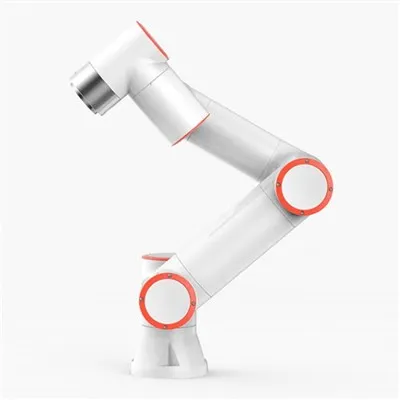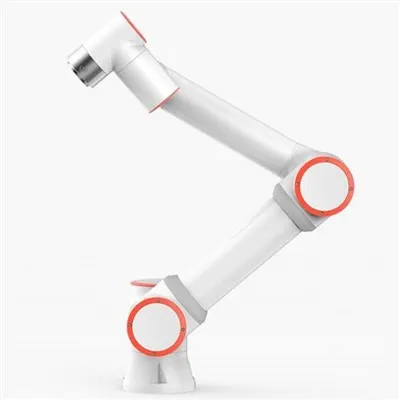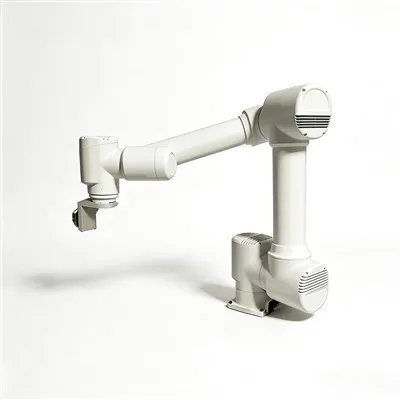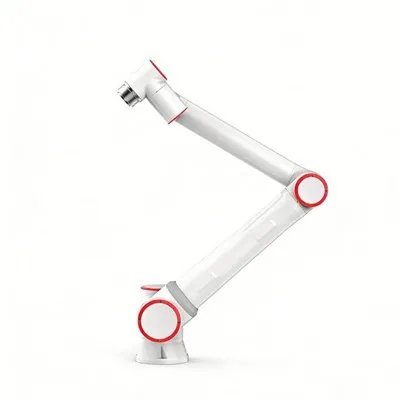


Superior flexibility constitutes one of the core advantages of the Magnetic Collaborative Welding Robot. It thoroughly resolves the inherent drawbacks of traditional welding equipment-including bulky build, fixed installation, limited operating range and narrow scenario compatibility-perfectly catering to diverse on-site welding requirements and accommodating most non-standard, sporadic and complex working conditions for steel structure fabrication.
In terms of workstation adaptability, conventional welding equipment depends on fixed installation and custom tooling brackets, which confine operations to single workstations for repetitive tasks and render relocation and station switching extremely cumbersome. In contrast, the Magnetic Collaborative Welding Robot requires no fixed base. Equipped with magnetic adhesion technology, it can firmly adhere to horizontal, vertical, curved and edged surfaces of various irregular steel workpieces. It works seamlessly with large steel structure frames, pipeline components and small scattered steel parts without requiring additional auxiliary tooling, greatly enhancing workstation switching flexibility.
In terms of operational scenarios, the robot breaks free from the constraints of fixed ground-mounted operation and delivers comprehensive compatibility. It operates flexibly in hard-to-access spaces such as narrow workshop gaps, equipment interlayers and internal component cavities, as well as in elevated suspended environments for factory steel frame assembly and outdoor steel structure installation. Lightweight and maneuverable, the robot can be transported, positioned and deployed by a single operator. It supports rapid deployment across multiple workshop areas, covering both standardized batch welding and sporadic repair welding to fit production modes involving alternating working scenarios and conditions.
In terms of human-robot collaboration flexibility, this collaborative welding robot distinguishes itself from large fully automatic industrial robots. It needs no enclosed working space or complicated pre-programming and scenario commissioning. The robot synchronizes with on-site manual workflows and construction rhythms. After operators locate workpieces and plan welding paths, the device responds instantly to assist with welding operations. It adapts promptly to evolving welding requirements and adjustable construction plans, overcoming the tedious commissioning process and inflexibility of traditional automated equipment, which makes it highly suitable for customized, fragmented welding projects.
Furthermore, the Magnetic Collaborative Welding Robot features outstanding angular flexibility, supporting multiple welding postures, including flat, vertical, overhead and vertical-up welding. It eliminates the single-angle operation limitation of conventional welding tools. For omnidirectional welding points on steel structures, repeated workpiece handling and tooling adjustments are unnecessary. Fine positional adjustments of the robot itself enable multi-angle, multidirectional welding, substantially cutting costs on workpiece transportation and tooling modification. Overall, with outstanding flexibility in site adaptation, scenario compatibility, angular adjustment and human-robot coordination, the device meets the welding demands of small and medium-sized processing plants, steel structure engineering contractors and equipment manufacturers, effectively improving workshop-wide welding efficiency and operational versatility.