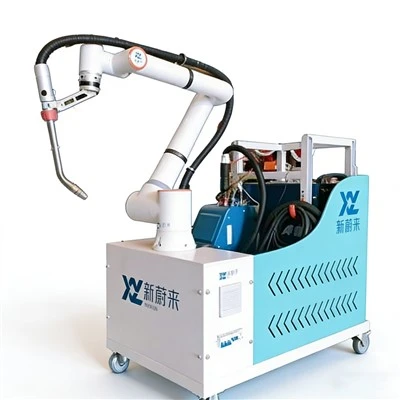


During daily operation, a Welding Collaborative Robot may be exposed to welding fumes, metal dust, welding slag, and spatter. Therefore, establishing proper cleaning and maintenance practices is important. Regular maintenance not only helps keep the equipment clean but also allows operators to identify potential problems at an early stage and helps maintain stable operating conditions.
First, the external surfaces of the Welding Collaborative Robot should be cleaned regularly according to actual operating conditions. Dust, welding fumes, and metal particles can easily accumulate on the robot during welding operations. If they are not removed for an extended period, the equipment may become increasingly contaminated. Suitable cleaning tools should be used according to the equipment's requirements, and cleaning methods that could damage the surface or allow contaminants to enter the equipment should be avoided.
The welding area also requires particular attention. Welding spatter can accumulate around the welding torch and nearby components. If spatter remains for an extended period, it may interfere with normal welding operations. Therefore, after a certain amount of welding work has been completed, operators should inspect the welding torch, relevant connection areas, and surrounding components and remove visible slag and spatter when necessary.
The robot's working area should also be kept clean. Metal fragments, tools, or other objects may fall into the working area during production. If these items are not removed, they may interfere with the robot's movements. Operators can therefore perform a simple inspection of the work area before and after operation to ensure that the robot's movement path remains clear.
In addition to cleaning, daily maintenance should include monitoring the equipment's operating condition. Operators can observe whether the robot moves smoothly and whether there are unusual sounds, unexpected pauses, or irregular movements. If the equipment behaves differently from its normal operating condition, the relevant operation should be stopped and the situation inspected rather than allowing the robot to continue operating abnormally.
The robot's moving components should also be inspected periodically. During long-term operation, some moving components may be affected by dust, welding spatter, and continuous movement. Operators should therefore pay attention to signs of contamination, abnormal wear, or changes in movement resistance and perform maintenance according to the equipment's recommended procedures.
Welding-related components should also be kept clean. Welding torches, connection areas, and other components involved in the welding process may accumulate debris over time, which can affect normal operation. Appropriate inspection intervals should therefore be established based on the actual production frequency rather than waiting until an obvious problem occurs.
It is also beneficial to establish a routine maintenance procedure. For example, operators can clean the external surfaces and organize the work area at the end of each working day, while regularly inspecting the robot's operating condition and related components. Any abnormalities should be recorded and handled promptly. A consistent maintenance routine can help prevent the equipment from remaining unchecked for long periods.
It is important to follow the equipment's operating and maintenance instructions during cleaning and maintenance. Tasks involving internal components, electrical parts, or other specialized maintenance should not be performed by untrained personnel. For regular operators, daily cleaning, visual inspection, and monitoring of operating conditions are generally the most appropriate maintenance activities.
Overall, daily maintenance of a Welding Collaborative Robot involves more than simply wiping the equipment. It includes cleaning, inspection, work-area organization, and monitoring of operating conditions. Establishing regular maintenance practices can help reduce the accumulation of contaminants and unnecessary wear while supporting stable and orderly equipment operation.