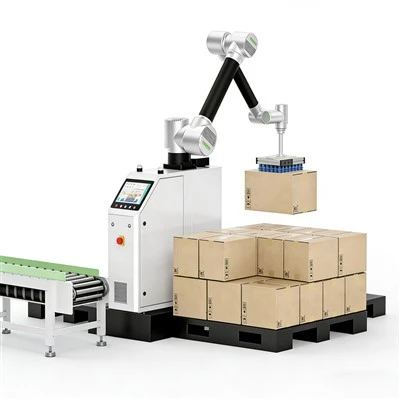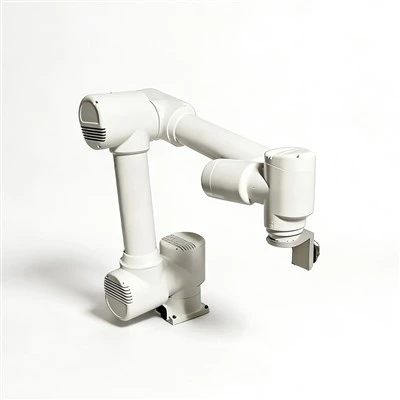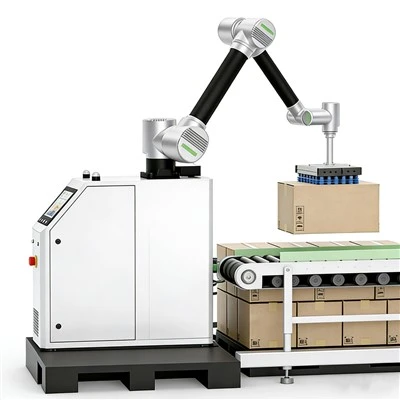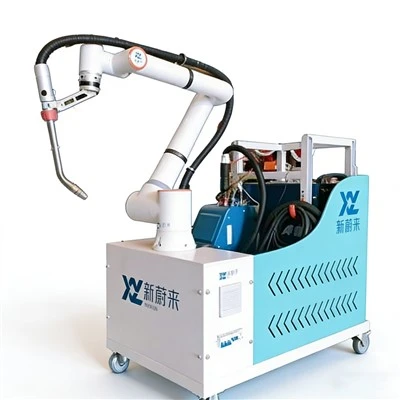

In the current development of manufacturing industry, more and more factories have bid farewell to the production mode of single-category long-term mass production and shifted to small-batch, multi-category, customized and fragmented order production. Traditional automated equipment features complicated debugging and high changeover costs and high startup barriers, only suitable for large-batch standardized mass production, and cannot adapt to small-order production scenarios. With the core strengths of high flexibility, fast changeover, low threshold and strong adaptability, the Six-Axis Collaborative Robot serves as the optimal automated solution for small-batch production scenarios, perfectly meeting the production requirements of various fragmented orders.
Traditional automated equipment has obvious drawbacks when applied to small-batch production. Large industrial robots and special automated production lines require long-time programming debugging, parameter calibration and fixture construction for a single product. The whole debugging process is time-consuming and costly. For mass production, debugging costs can be allocated to a huge quantity of products. But for small-batch orders of dozens or hundreds of pieces, debugging costs far outweigh production benefits. As a result, most small and medium-sized enterprises dare not adopt automated equipment and have to rely on full manual production, which suffers from low efficiency, large errors and high labor costs. The Six-Axis Collaborative Robot completely solves this industry pain point, as it is specially designed for flexible changeover and small-order production.
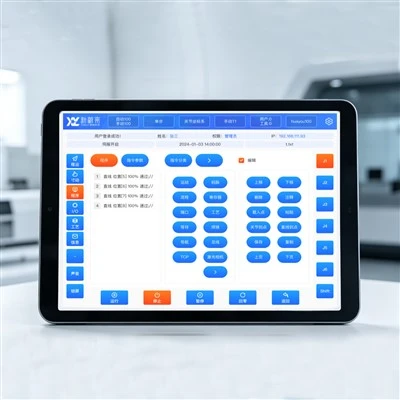
The equipment's rapid changeover capability is its core advantage for adapting to small-batch production. For different categories and different specifications of small orders, the robot does not need complex fixture modification, full parameter reset or debugging by professional technicians. Operators can quickly modify the robot's operation motions through simple teaching or one-click program switching, finishing changeover debugging within a few minutes and putting new product production into operation rapidly. For multi-category, small-batch and frequent order switching production scenarios, the changeover efficiency is extremely high and almost generates no extra time or capital cost, perfectly matching the production rhythm of fragmented orders.
In addition, the flexible operation feature of the equipment adapts to non-standard small orders. Many small-batch orders belong to customized non-standard products with inconsistent operation processes, motions and specifications, which cannot be handled by traditional standardized automated equipment. The Six-Axis Collaborative Robot has flexible motions and high degrees of freedom. It can adapt to various non-standard assembly, sorting, inspection, polishing, loading and unloading processes without customized exclusive equipment. One machine can meet the operation demands of multiple non-standard small orders, greatly cutting equipment investment costs for customized production of enterprises.
Besides, the advantages of lightweight deployment and low-operation threshold also fit small-batch production scenarios well. Small-order production does not require large-scale production line renovation or long preparation before production launch. The equipment can be deployed and put into production quickly after arrival, adapting to the demands of ad-hoc order receiving, short-term production and customized manufacturing. No professional technical team is required for operation and maintenance, and ordinary frontline workers can complete operation and production changeover. It thoroughly addresses the difficulties for small and medium-sized enterprises such as insufficient technical staff, high automation transformation cost and difficult implementation in small-order production, making it core automated equipment matching the small-batch multi-category production mode of small and medium-sized factories at present.