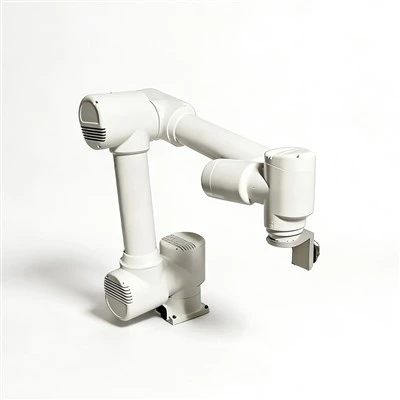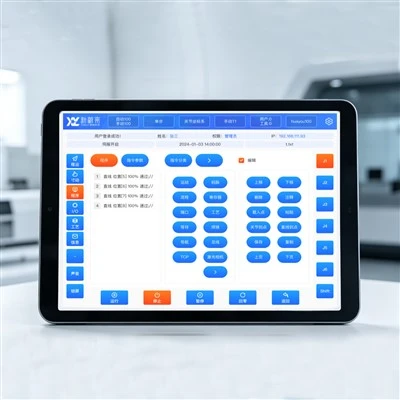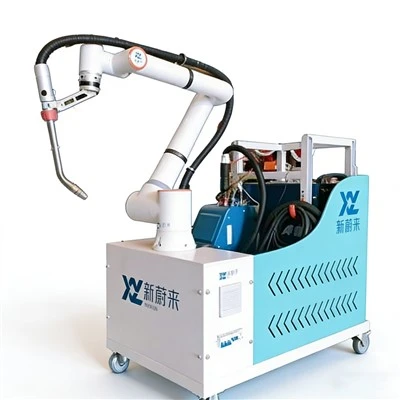


The biggest core advantage of the Six-Axis Collaborative Robot lies in its strong scene adaptability. Different from traditional large industrial robots with fixed, single functions and exclusive production line requirements, it relies on its lightweight body, flexible movement and human-robot integration features to adapt to conventional workstations in most manufacturing and light industries. It is especially suitable for all manual repetitive, tedious, high-frequency and low-technical-content operation posts, and can also take on some refined operation scenarios, covering multiple industries and diverse production modes.
First of all, workstations in the electronics manufacturing industry are the most widely applied scenarios for the Six-Axis Collaborative Robot. For component assembly workstations of various electronic products, such as parts splicing, buckle assembly and small component fitting for mobile phones, earphones, circuit boards and small home appliances, long-term manual operation easily leads to fatigue, inconsistent hand feel and uneven assembly quality. The collaborative robot can stably complete standardized assembly movements. Meanwhile, material loading and unloading and product sorting and palletizing workstations in electronics factories are also highly compatible. For small workpieces flowing on assembly lines, the robot can accurately pick up, place and transfer items to match the operating rhythm of high-speed production lines. Besides, auxiliary appearance inspection, screw locking and label pasting workstations for electronic products are also fully applicable to replace manual work in single repetitive tasks.
Next are workstations for hardware, auto parts and mechanical processing. The collaborative robot can perform stable operations in transferring, placing and organizing small hardware parts, precision auto accessories and tiny mechanical components, effectively avoiding repetitive strain injuries caused by manual handling of small workpieces. In addition, auxiliary workstations for deburring and simple polishing of workpieces are also well suited. Without heavy-duty equipment support, the flexible movements of the robot can adapt to refined polishing of small parts. At auxiliary machining workstations, the robot can finish machine tool loading and unloading and workpiece positioning and placement, meeting the regular operation needs of small and medium-sized processing workshops and matching supporting workstations for various small and medium machine tools.
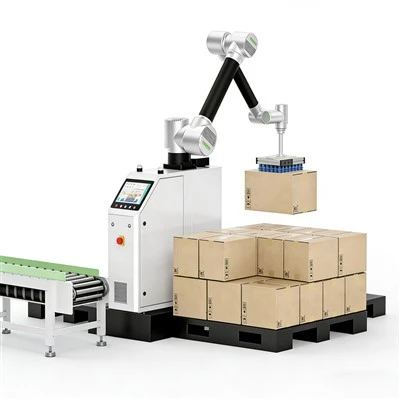
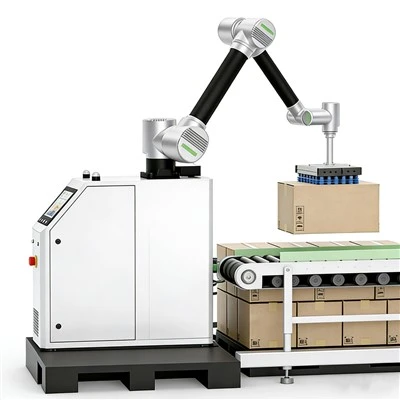
Furthermore, it fits regular workstations in light industry, food and packaging sectors. Assembly, packaging and box-filling workstations for daily chemical supplies, toys and plastic products feature highly monotonous and repetitive movements, which are core applicable scenarios for the collaborative robot. The robot can automatically complete product boxing, box sealing assistance, material subpackaging and finished product palletizing to adapt to mass production modes on assembly lines.
Apart from these, it is applicable to various non-standard flexible workstations and small-scale flexible operation posts. Many small and medium-sized factories have unfixed production lines and flexible workstation layouts, which traditional industrial robots cannot adapt to. The Six-Axis Collaborative Robot requires no heavy fixed base or protective fences and can be directly deployed in narrow workstations, beside assembly lines and on independent operation tables. For multi-product and small-batch switching production workstations, the robot can quickly adjust operation motions to meet the operation requirements of different products. Meanwhile, auxiliary workstations such as laboratory material handling, sample sorting and small-item sorting in warehouses are also fully compatible, covering various operation scenarios including production, assistance and supporting tasks. Overall, the Six-Axis Collaborative Robot can be applied to almost all lightweight, repetitive and refined workstations that can be completed manually, covering nearly all small and medium-sized manufacturing enterprises across categories.