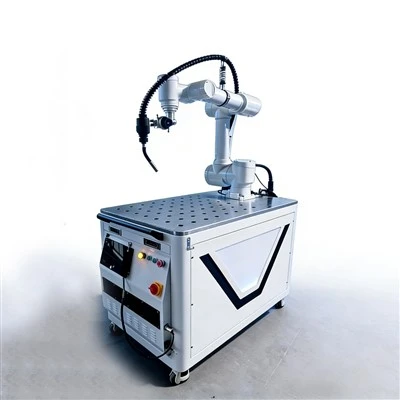
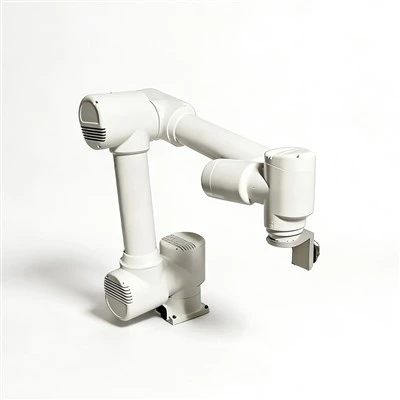
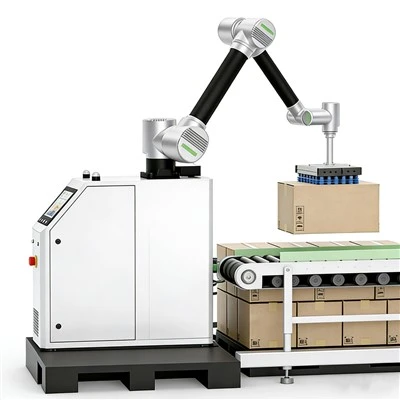
The 1600 Arm Span Collaborative Welding Robot is a six-axis flexible collaborative automated welding system purpose-built for medium and small industrial workpiece welding production scenarios. It takes its core product identifier from its optimized 1600mm working arm span, integrating five core competitive advantages: ultra-precision welding capability, flexible multi-workpiece operation, robust harsh working condition compatibility, simplified routine maintenance and superior overall cost performance. It precisely targets the market segment of medium and small manufacturing enterprises pursuing welding production automation upgrades, functioning as a lightweight industrial welding robot balancing universal cross-industry applicability and specialized welding functionality with clearly defined product definition and targeted market positioning.
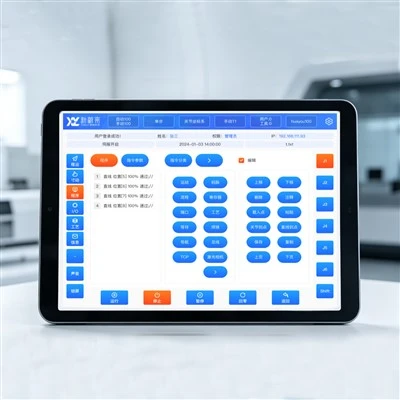
Starting with core product definition, this equipment falls under the classification of industrial-grade collaborative welding robots, distinguishing it from heavy-duty traditional industrial robotic welders and low-spec civilian educational robotic arms by its exclusive focus on industrial mass-production practical functionality. Equipped with industrial-grade servo drive assemblies, high-precision motion control systems and proprietary specialized welding process algorithms, the robot independently executes complete end-to-end automated welding workflows while retaining the core flexible advantages inherent to collaborative robotic systems. It eliminates the requirement for large, complex safety perimeter fencing, enabling direct human-machine collaborative co-working within the same production workstation. The 1600mm arm span represents an optimal golden working radius calculated and validated through massive industrial working condition big data analysis. It delivers full dimensional coverage for over 90% of all medium and small industrial welding workpieces, striking a perfect balance between sufficient working range and exceptional end-effector precision. It resolves two opposing limitations simultaneously: restricted working coverage plaguing compact short-arm robots and excessive wasted floor space alongside compromised end rigidity inherent to overlong heavy-duty robotic arms.
Regarding core market positioning, the product' s official core positioning statement is: a universal automated welding solution optimized for medium and small workpieces, flexible batch production capability and outstanding cost performance. Its primary target customer groups include medium and small manufacturing factories, metal hardware processing plants, automotive component manufacturers and non-standard custom metal fabrication workshops. The product is engineered to directly resolve two pervasive industry bottlenecks. First, persistent challenges tied to manual welding operations: limited throughput efficiency, inconsistent finished weld quality, year-on-year rising skilled welder labor expenses and widespread industry shortages of certified experienced welding technicians. Second, drawbacks associated with legacy large-scale industrial robotic welding systems: oversized floor space requirements, complex site deployment procedures, prohibitive upfront equipment capital investment and rigid, slow workpiece reconfiguration that renders them unsuitable for multi-specification, low-volume custom manufacturing workflows.
On functional positioning, the robot seamlessly accommodates dual manufacturing modes: standardized high-volume mass production and flexible custom order fabrication. It delivers stable 24-hour non-stop mass-production welding capability for standardized identical workpieces to guarantee consistent throughput and uniform finished weld quality across all batches. Simultaneously, it supports ultra-fast program switching and re-teaching for new workpiece specifications, adapting efficiently to multi-model, low-batch custom non-standard component welding tasks compatible with the vast majority of medium and small industrial welding working conditions. For cost performance positioning, the robot adopts a lightweight, highly integrated mechanical and electrical design architecture. Its combined total expenditure covering initial equipment procurement, on-site production line deployment and long-term routine maintenance is far lower than comparable heavy-duty industrial robotic welding equipment. Meanwhile, its operational throughput efficiency, welding precision and long-term operational stability vastly outperform manual welding and low-spec basic semi-automated welding machinery, delivering exceptional return on investment for manufacturing plant owners.
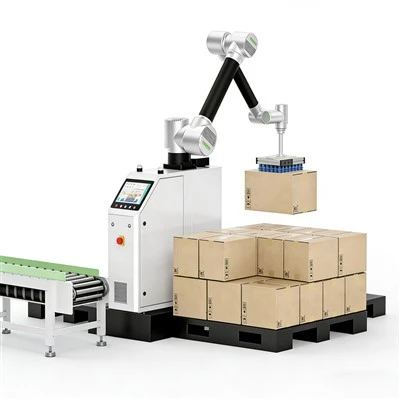
For application deployment positioning, the robot prioritizes lightweight workshop compatibility with compact overall physical dimensions and flexible multi-mode installation options including floor mounting, wall mounting and overhead inverted mounting alongside portable mobile workstation integration capability. It achieves rapid on-site commissioning and production launch without requiring costly large-scale structural renovation of existing factory facilities, perfectly fitting automation upgrade projects for legacy aging manufacturing workshops, new dedicated automated production line construction and flexible workstation retrofitting assignments of all types. Overall, the 1600 Arm Span Collaborative Welding Robot precisely fills a critical market gap for accessible automated welding equipment optimized for medium and small industrial workpiece production scenarios, serving as an indispensable core capital equipment asset for medium and small manufacturing enterprises pursuing welding production automation transformation to cut operational costs, boost manufacturing throughput and stabilize consistent high-quality finished output.

 English
- English
- Français
- Deutsch
- 日本語
- Italiano
- Español
- Português
- русский
- 한국어
- Malti
- Čeština
- O'zbek
- Latviešu
- magyar
- Việt Nam
- فارسی
- українська
- Bai Miaowen
- हिंदी
- Norsk
- Srbija jezik (latinica)
- Kreyòl Ayisyen
- עברית
- Ελληνικά
- dansk
- bosanski
- Türkçe
- اردو
- Lietuvių
- slovenščina
- Svenska
- ไทย
- íslenska
- Cymraeg
- Gaeilgenah Éireann
- hrvatski
- slovenčina
- România limbi
- Polski
- عربي
- Català
- Eesti
- Български
- Nederlands
- বাংলা
- Indonesia
- Melayu
- suomi