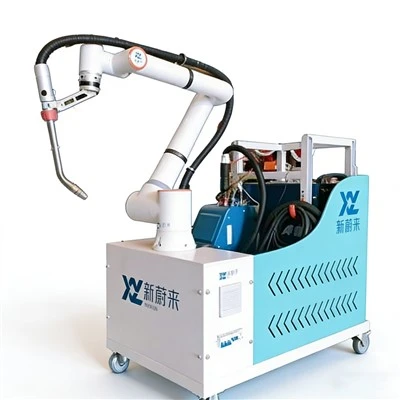

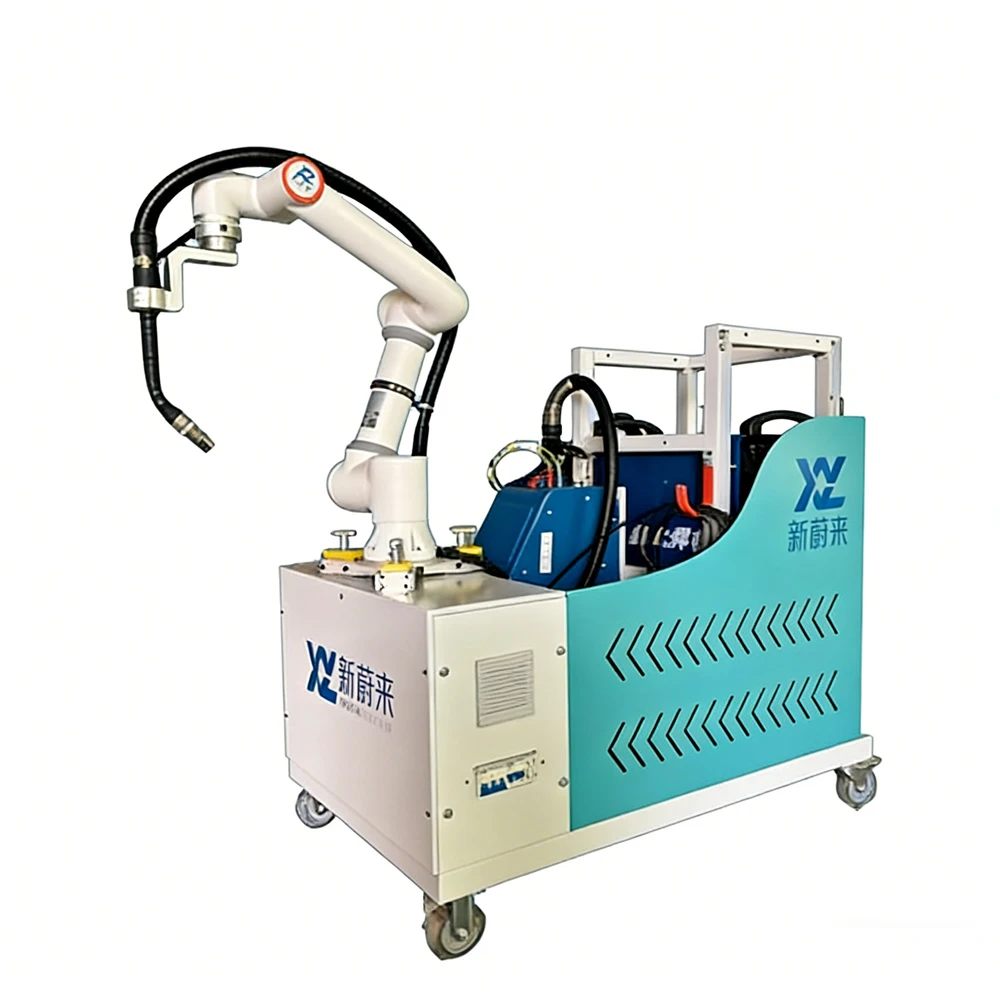
Welding Collaborative Robots offer good operational flexibility and can be used in various production environments that require continuous welding operations. They are suitable for welding mechanical components, metal structural parts, sheet metal products, equipment frames, and other metal workpieces. When welding tasks are relatively repetitive and follow a consistent process, a Welding Collaborative Robot can be considered to assist with the work.
In batch production, a Welding Collaborative Robot can continuously perform welding tasks according to a predefined workflow, reducing the need for workers to repeatedly perform the same operations. For welding processes where the welding positions are relatively fixed and the workpieces remain consistent, the robot can handle a large amount of repetitive work. This allows workers to focus more on workpiece preparation, production management, quality inspection, and other tasks.
Welding Collaborative Robots can also provide value in small-batch production environments. Some companies do not continuously manufacture a single product but instead need to switch between different workpieces according to changing orders. A Welding Collaborative Robot offers a flexible operating approach and can adjust its workflow according to actual production tasks, making it suitable for welding operations that involve a certain degree of variation.
In production areas with limited space, a Welding Collaborative Robot can also be used as an auxiliary welding device. By arranging the robot, fixtures, and operators in a well-planned working area, companies can make more efficient use of available production space and create a more organized welding process.
In addition, Welding Collaborative Robots are suitable for welding tasks that involve high labor intensity, long working hours, or frequent repetitive movements. By taking on continuous mechanical operations, the robot can reduce the fatigue caused by prolonged repetitive work. This is particularly useful in production processes where maintaining a consistent working rhythm is important.
However, not every welding application is suitable for direct implementation of a Welding Collaborative Robot. In actual applications, factors such as workpiece shape, welding positions, workpiece placement, and the surrounding working environment should be considered. The robot's working range, workpiece condition, and actual welding process need to work together effectively to achieve the best results.
Overall, Welding Collaborative Robots are particularly suitable for welding applications that involve repetitive tasks, clearly defined workflows, and relatively stable workpieces. They are also a practical choice for companies seeking to gradually reduce repetitive manual work and improve production continuity.