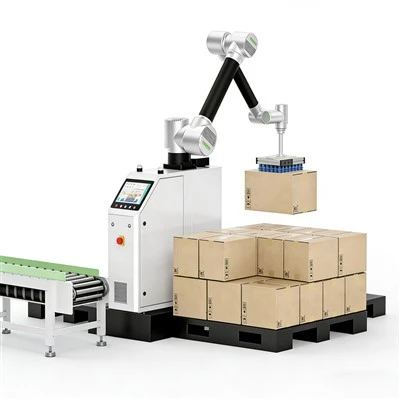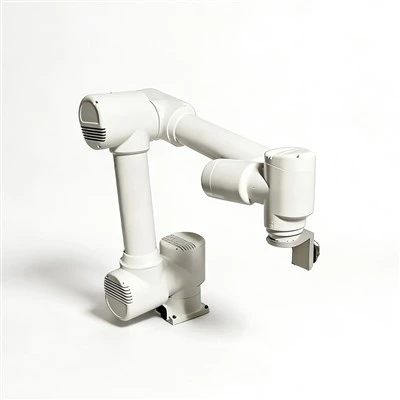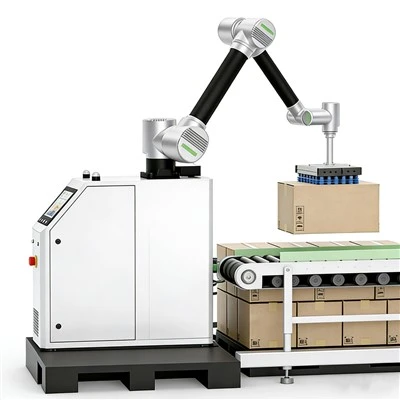

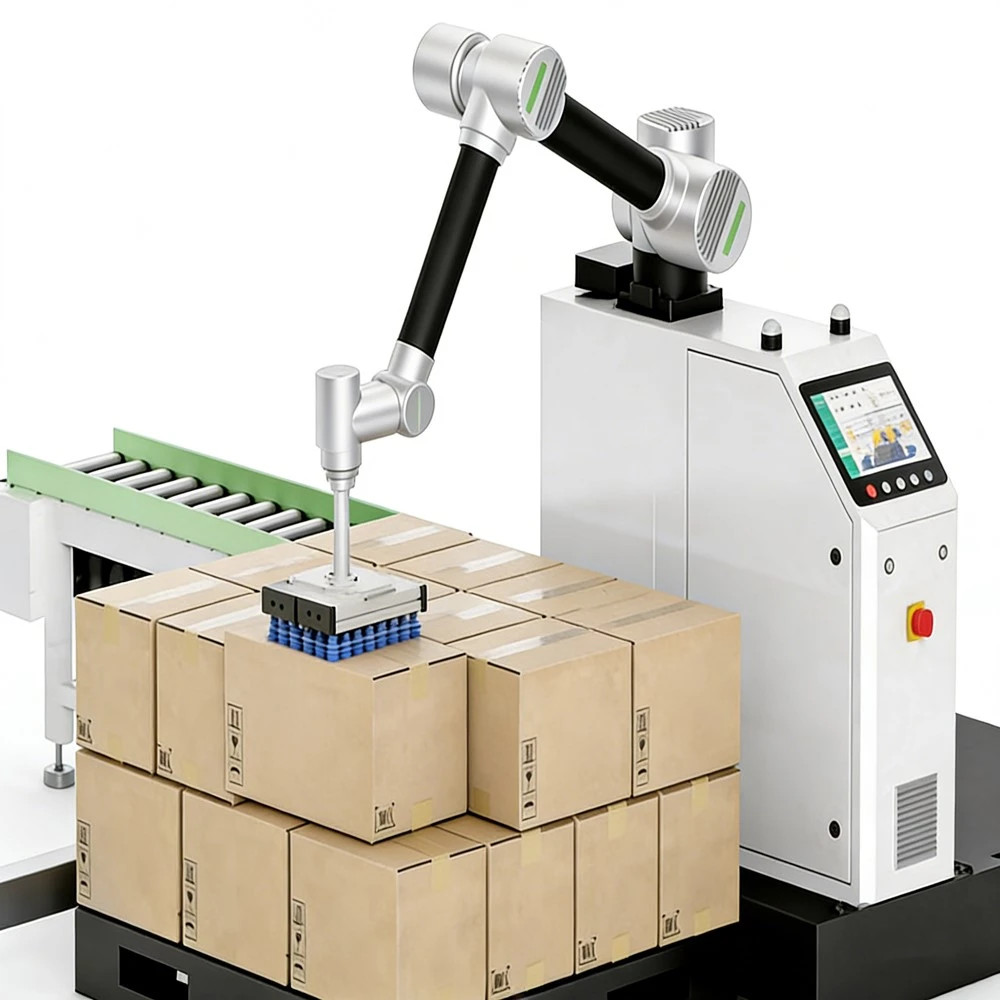
Collaborative Palletizing Robots can improve production efficiency in many ways and are important equipment for upgrading production line automation. Traditional manual palletizing usually requires workers to continuously perform handling, placement, and sorting tasks. Long-term repetitive operations can be affected by physical fatigue and working conditions, while Collaborative Palletizing Robots can complete these tasks continuously according to preset programs with stable working performance.
First, Collaborative Palletizing Robots can reduce waiting time during production processes. On automated production lines, products need to be transferred and stacked promptly after packaging. Manual operations may be limited by the number of workers and working speed. Robots can cooperate with production equipment to achieve smoother material flow and improve overall production efficiency.
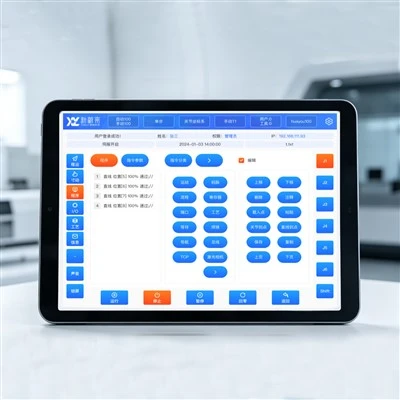
Second, Collaborative Palletizing Robots can improve the accuracy of palletizing operations. Through control systems and programmed movements, robots can arrange products according to predefined patterns, ensuring consistent stacking results for different batches. This helps improve the standardization of packaging and transportation processes while reducing problems caused by inconsistent manual placement.
In addition, Collaborative Palletizing Robots have strong continuous operation capabilities. In production environments that require long working hours, robots can take over large amounts of repetitive tasks, reducing frequent manual involvement and allowing employees to focus on equipment management, quality inspection, and other higher-value activities.
Collaborative Palletizing Robots can also improve the utilization of production space. Compared with traditional large-scale automation equipment, collaborative robots usually feature a more flexible structure and require less installation space. They can be adjusted according to different production layouts, making them suitable for enterprises with various production scales.
It should be noted that the improvement of production efficiency depends not only on the robot itself but also on production line design, material characteristics, and workflow planning. Only by configuring robot programs according to actual production requirements can enterprises fully utilize their advantages.
Therefore, Collaborative Palletizing Robots can not only improve the efficiency of individual operations but also optimize overall production processes, providing reliable support for enterprises to achieve more efficient and stable automated manufacturing.