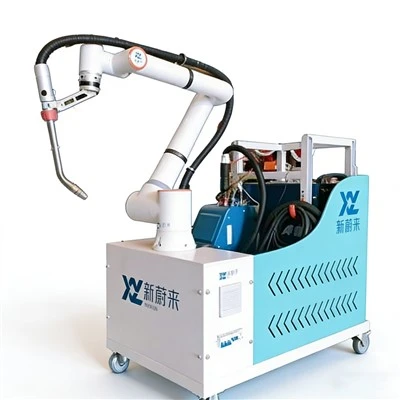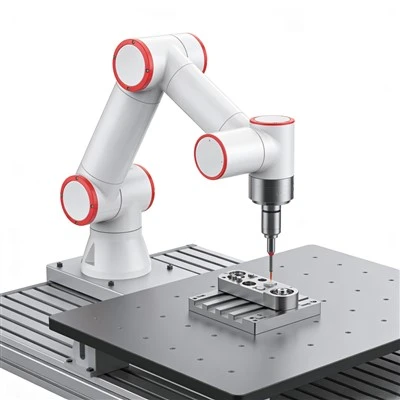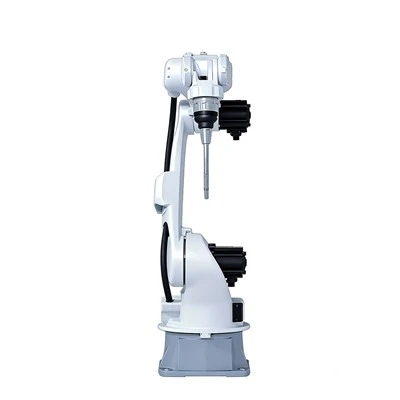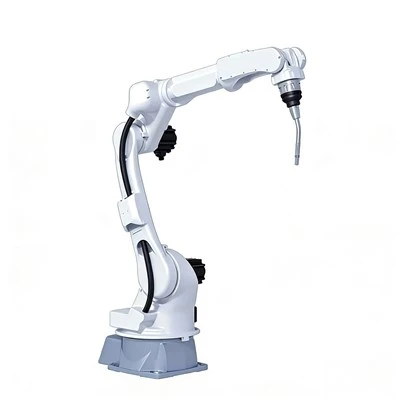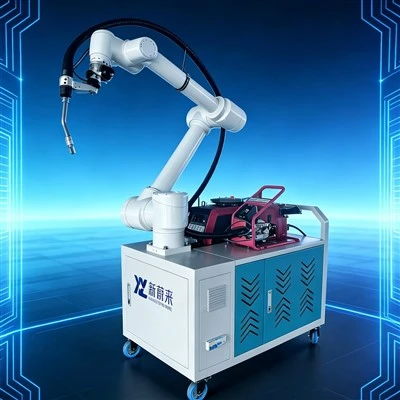

Possessing powerful scenario adaptability and operational flexibility, the Mobile Welding Robot easily manages diverse and complicated welding conditions in factories. It eliminates drawbacks of traditional welding equipment including single‑purpose operation, limited applicability and poor compatibility, suiting the prevailing flexible manufacturing mode characterized by multiple product types and small‑batch outputs. It meets most industrial welding requirements and outperforms fixed welding machines and manual welding in versatility and practical value.
In terms of compatibility with workpiece structures, the robot delivers great operational flexibility for both standard and special‑shaped workpieces. It performs stable welding for common joint forms such as butt joints, fillet joints, lap joints, gap welding, curved‑surface welding, circular‑arc welding and corner reinforcement welding. It also accommodates non‑standard workpieces of varying dimensions. Whether for small precision components or large heavy‑duty parts, flexible mechanical adjustments and intelligent program adaptation enable standardized welding without equipment replacement or extensive workstation modification. This removes the restriction of conventional machines that only suit single workpieces or single processes.
Regarding environmental adaptability, the robot copes with varied complex workshop conditions. In compact workspaces with densely‑arranged machinery, its compact body, flexible mobility and adjustable working range allow precise welding within confined spaces without dead zones or operational restrictions. For uneven layouts and scattered welding points, it relocates freely for accurate positioning and modifies working angles and strokes to satisfy non‑standard and dispersed welding demands. It covers regular mass production, temporary repair welding, rework tasks and small‑batch custom processing, balancing high‑volume efficiency and the flexibility of sporadic operations.
For diverse production modes, it supports flexible manufacturing with simple scenario transition. When switching between different workpiece types, complicated program rewriting and specialized debugging are unnecessary. Operators can start new tasks quickly through minor parameter modifications and position adjustment, shortening transition time between scenarios and processes. Unlike conventional machines bound to fixed working conditions and procedures, this robot supports multi‑variant alternating production, cross‑station operations and hybrid workflows combining old and new processes. It serves regular mass manufacturing, new‑product trial runs, supplementary order production and workpiece rework. Thanks to its high compatibility across scenarios, it satisfies diversified manufacturing needs, improves workshop production flexibility and equipment utilization, and reduces capital investment for production hardware.