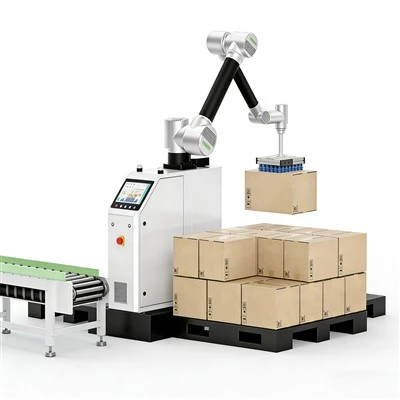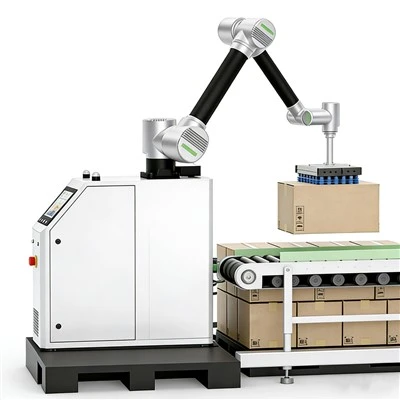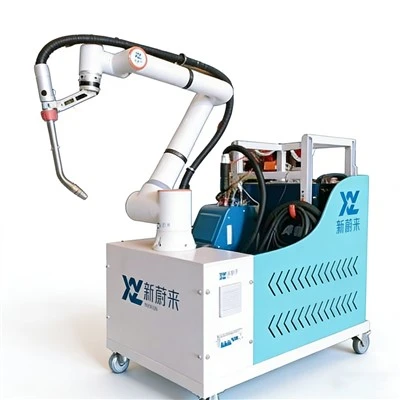

A Palletizing Collaborative Robot is an automated material-handling solution commonly used at the end of production lines. Its primary function is to pick up cartons, bagged products, and other suitable packaged materials and arrange them systematically on pallets. The robot operates through the coordinated interaction of a control system, robotic arm, end-of-arm gripping device, and associated conveying equipment. This combination enables automated product handling and pallet stacking, supporting continuous and organized palletizing operations.
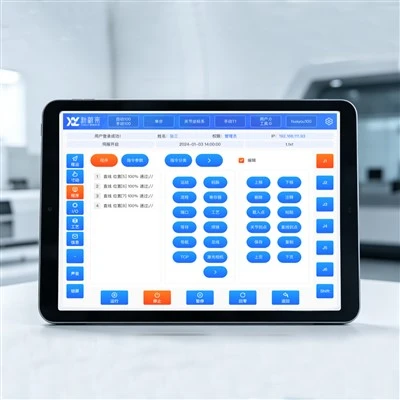
The robot control system serves as the central component of the palletizing process. Operators can configure palletizing programs according to product packaging characteristics, pallet arrangement requirements, and production workflows. These programs typically define the picking position, movement path, placement position, stacking sequence, and arrangement of individual layers. Once the robot receives an operating command, it follows the programmed instructions to perform the required movements, ensuring a consistent and orderly palletizing process.
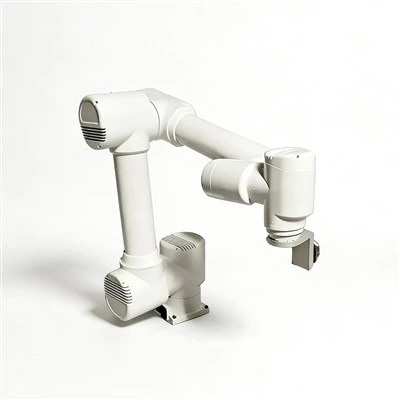
The robotic arm is responsible for moving products between different positions. A Palletizing Collaborative Robot typically uses coordinated movements across multiple joints to perform handling operations in different directions. When a product reaches the designated picking area, the robotic arm moves into position and uses its end-of-arm gripping device to secure the product. It then transports the product along a planned path and positions it above the pallet. The control system coordinates these movements to ensure that picking and placement operations follow the established sequence.

The end-of-arm gripping device plays an essential role in product handling. Different gripping methods may be used depending on the packaging material, product shape, and surface characteristics. For example, vacuum suction systems are often suitable for cartons with relatively flat surfaces and adequate sealing properties. Certain bagged products or packages with different shapes may require mechanical gripping devices. Selecting an appropriate gripping method is important because it directly affects handling stability and the reliability of the palletizing process.
In practical production environments, a Palletizing Collaborative Robot often operates alongside packaging machines and conveyor systems. After packaging is completed, products are transported by conveyor to the designated picking area. When the robot receives the appropriate signal, it picks up the product and places it at a predetermined position on the pallet. This coordinated operation helps establish a continuous workflow between packaging and palletizing, reducing the need for repetitive manual handling at the end of the production line.
A Palletizing Collaborative Robot can also follow different predefined stacking patterns. Depending on the packaging characteristics and pallet stability requirements, products may be arranged in aligned layers, interlocking patterns, or other suitable configurations. By controlling picking positions and placement sequences, the robot stacks products layer by layer according to the selected arrangement. This helps improve stacking consistency and maintain an organized pallet structure.
Some Palletizing Collaborative Robot systems can also work with sensors or machine vision equipment. When product positions vary, detection devices can provide position information to the control system, helping the robot determine appropriate picking conditions. However, not every Palletizing Collaborative Robot includes machine vision capabilities. The actual operating method depends on the equipment configuration and production line design.
Overall, a Palletizing Collaborative Robot works through the coordinated operation of its control system, robotic arm, gripping device, and conveying equipment. By automatically transferring products from the production line to pallets and arranging them in predefined patterns, it reduces repetitive manual labor, improves stacking consistency, and helps manufacturers increase automation at the end of their production lines.