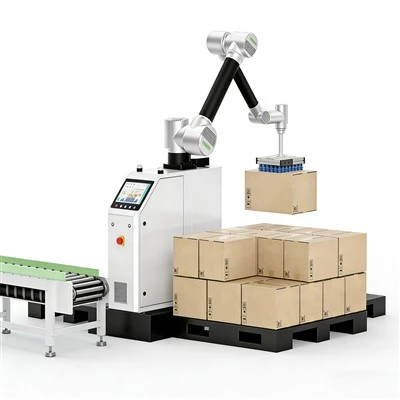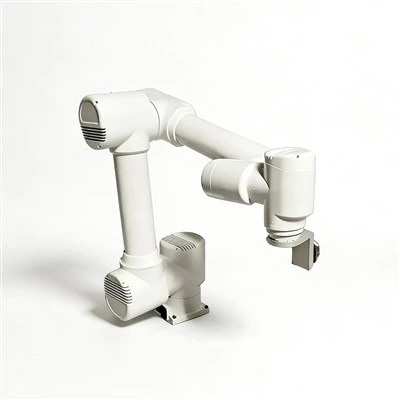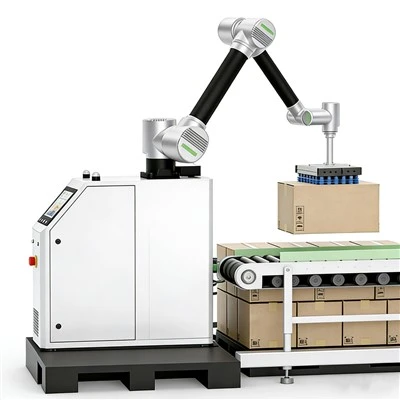


A Palletizing Collaborative Robot is a versatile automated material-handling solution designed primarily for picking, transporting, and stacking products at the end of production lines. Since many industries need to arrange packaged products systematically on pallets, this type of robot can be used in food processing, beverage production, pharmaceuticals, household chemicals, chemical manufacturing, electronics, building materials, and warehousing and logistics. Its suitability depends mainly on product packaging, handling requirements, production workflows, and operating conditions.
The food processing industry is one of the most common application areas for a Palletizing Collaborative Robot. Food manufacturers often need to palletize packaged biscuits, snacks, seasonings, grains, and other products. After these products are packed into cartons or bags, they must be arranged on pallets for subsequent handling and storage. A Palletizing Collaborative Robot can perform repetitive picking and stacking operations according to predefined programs, reducing manual handling requirements and supporting more continuous operations at the end of packaging lines.
The beverage industry is another suitable application. Bottled water, fruit juice, soft drinks, and other liquid products are typically packed into cartons or grouped into transport packages before palletizing. Beverage production lines often operate with continuous packaging processes, making repetitive manual handling physically demanding. A Palletizing Collaborative Robot can work alongside conveyor systems to pick up appropriately packaged products and arrange them on pallets according to predetermined stacking patterns. This helps manufacturers improve operational efficiency at the end of their production lines.
A Palletizing Collaborative Robot can also be used in pharmaceutical and related packaging operations. Medicines, medical supplies, and other healthcare products often require organized stacking after packaging. For products with consistent packaging formats that are suitable for mechanical handling, the robot can follow predefined movement paths to perform automated palletizing. This reduces repetitive manual operations and improves placement consistency. However, its role is primarily focused on handling packaged materials, and its application should be evaluated according to the production environment and product management requirements.
The household and personal care industry also offers valuable applications. Detergents, personal care products, cleaning supplies, and other consumer goods are commonly transported and stored in cartons or similar packaging. A Palletizing Collaborative Robot can automatically handle these packaged products, helping manufacturers reduce repetitive manual lifting and maintain orderly pallet arrangements.
In the chemical industry, certain bagged, boxed, or containerized products may also be suitable for robotic palletizing. For example, some powdered, granular, or appropriately packaged chemical products require pallet stacking after packaging. A Palletizing Collaborative Robot can perform these operations using suitable gripping methods. However, products involving corrosive, flammable, or otherwise hazardous materials require careful consideration of the operating environment and associated risks. Packaging format alone is not sufficient to determine whether robotic handling is appropriate.
Overall, a Palletizing Collaborative Robot can be applied across many industries that involve repetitive handling and stacking of packaged products. When packaging characteristics, production workflows, and operating conditions are suitable for automated picking and placement, robotic palletizing can be a practical option. Its application helps reduce physical labor, improve stacking consistency, and support the gradual development of automated production and logistics operations.