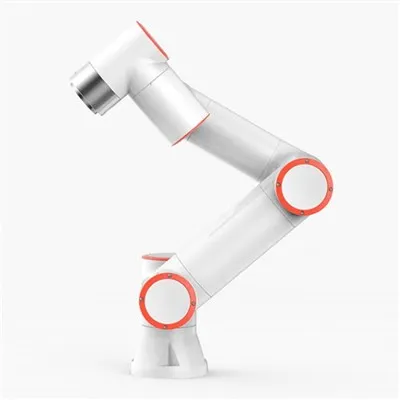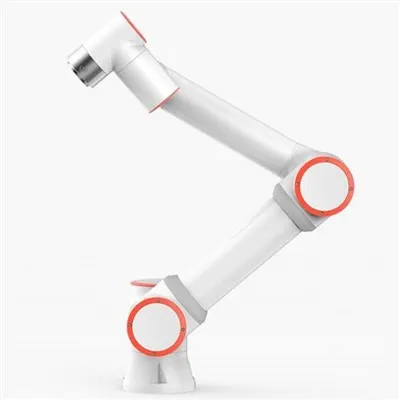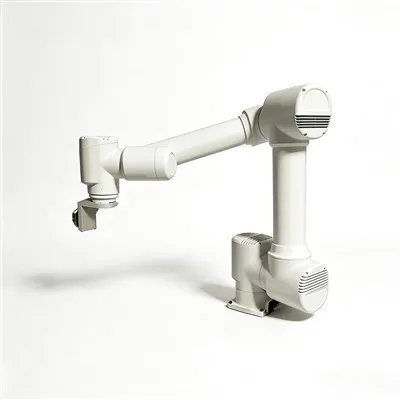

As the manufacturing industry continues to evolve towards digitalization, networking, and intelligence, the role of industrial robots in the future industrial system will be further enhanced. From an equipment perspective, industrial robots will no longer exist merely as standalone work devices, but will gradually integrate into production lines, workshops, and even factory-level systems, becoming a crucial basic unit of intelligent manufacturing systems. Their development prospects are reflected not only in improved equipment performance but also in the overall efficiency gains brought about by deep integration with manufacturing systems. More and more 3D vision and force sensors will be used in robots, making them increasingly intelligent. With advancements in sensing and recognition systems, artificial intelligence, and other technologies, robots are evolving from being unidirectionally controlled to storing and applying their own data, gradually becoming information-based. With advancements in multi-robot collaboration, control, and communication technologies, robots are evolving from independent entities to interconnected, collaborative systems.
In terms of technological development, industrial robots will continue to evolve towards higher precision, higher reliability, and higher flexibility. With continuous improvements in motion control, sensing technology, and information processing capabilities, the stability and adaptability of industrial robots in complex environments will be further enhanced, enabling them to handle more refined and diversified production tasks. Meanwhile, the advancement of modular design and standardized interfaces helps reduce system integration difficulty and improve the deployment efficiency of industrial robots in different application scenarios.
At the application level, industrial robots will extend from traditional manufacturing fields to more industries. In addition to mature application areas such as automotive, electronics, and equipment manufacturing, the application potential of industrial robots in new energy, semiconductors, food, and pharmaceutical industries is gradually emerging. Furthermore, the application scenarios of industrial robots are further expanding into emerging fields such as public safety; for example, robot research and development and cooperation in specific scenarios such as security patrol and police intelligent terminals are on the rise. As manufacturing models shift towards multi-variety, small-batch, and flexible production, the advantages of industrial robots in rapid changeover, collaborative operations, and flexible production organization will become more prominent, and their application scope and depth are expected to further expand.
At the industry development level, the industrial robot industry will place greater emphasis on supply chain collaboration and ecosystem construction. The improvement of core components, autonomous control systems, and system integration capabilities will become important factors affecting industry competitiveness. At the same time, "embodied intelligence" has become one of the important strategic development directions of the industry, and related companies are committed to building a complete supply chain system from core components to industry-specific robots, promoting the deep integration of robot technology with specific scenarios. Meanwhile, the integration of industrial robots with the Industrial Internet, data platforms, and production management systems helps promote the data-driven and intelligent management of manufacturing processes, improving the overall operational efficiency and quality of the manufacturing system.
Overall, as a crucial technological equipment in modern manufacturing, the development prospects of industrial robots are closely related to the transformation and upgrading of the manufacturing industry. With technological advancements, deeper applications, and a continuously improving industrial environment, industrial robots will continue to play a vital role in improving production efficiency, enhancing the working environment, and promoting high-quality development in the manufacturing sector, further consolidating their fundamental position in the future industrial system.