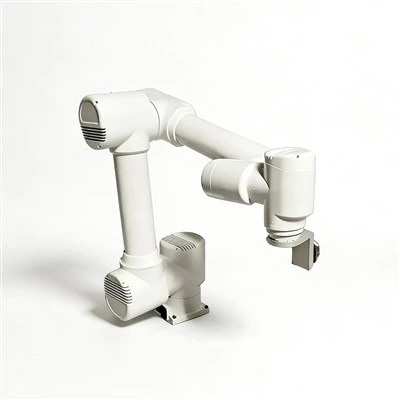


As manufacturing automation continues to develop, more companies are considering using a Palletizing Collaborative Robot to replace traditional manual palletizing. For production lines that involve continuous product handling and repetitive pallet stacking, robotic palletizing can perform many routine tasks, reduce physical labor, and increase automation at the end of the production process. However, whether a robot can completely replace manual palletizing depends on the production environment, product characteristics, and overall workflow.
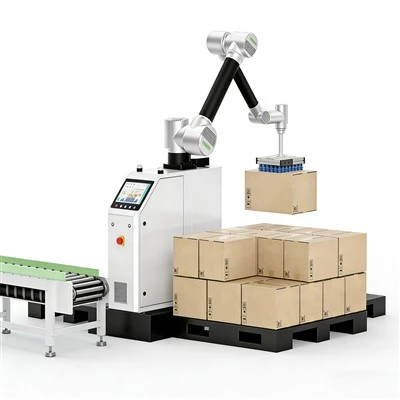
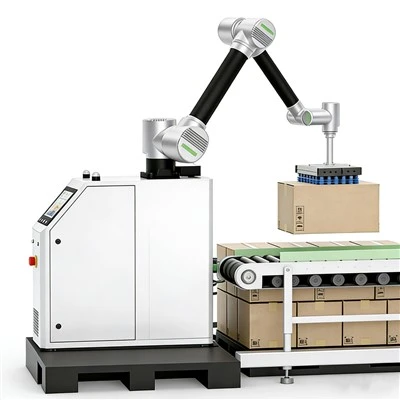
A Palletizing Collaborative Robot can replace repetitive manual picking and stacking operations. In traditional manual palletizing, workers repeatedly lift products from conveyors or designated locations and arrange them on pallets. These tasks often involve repetitive movements, extended working periods, and considerable physical effort. A Palletizing Collaborative Robot can automatically perform picking, transferring, and placement operations according to predefined programs, reducing the need for workers to participate directly in repetitive material handling.
A Palletizing Collaborative Robot can also improve operational continuity. Manual palletizing performance may vary because of physical fatigue, working hours, and individual differences between operators. Repetitive lifting and stacking over extended periods can lead to fluctuations in working speed. In contrast, a robot can repeatedly execute programmed movements at a consistent pace when equipment conditions are normal and product supply remains stable. This helps reduce waiting time caused by variations in manual handling speed at the end of production lines.
Another advantage is improved consistency in palletizing positions. During manual palletizing, different workers may use slightly different handling techniques and placement methods, potentially resulting in uneven stacking or inconsistent product positioning. A Palletizing Collaborative Robot follows predefined picking positions, movement paths, and placement sequences, allowing products to be arranged in a more consistent manner. This improves stacking uniformity and supports more organized pallet preparation.
A Palletizing Collaborative Robot can also help reduce the physical demands placed on workers. Repeatedly lifting cartons, bagged products, and other packaged materials can be physically demanding, particularly during long production shifts. Assigning these repetitive tasks to a robot reduces the need for frequent bending, lifting, carrying, and placing movements. Employees can then focus on other responsibilities, such as equipment supervision, production coordination, and quality inspection.
From a production management perspective, a Palletizing Collaborative Robot can support more efficient workforce allocation. In factories experiencing labor shortages or high manual handling workloads, the robot can perform routine palletizing operations while existing employees concentrate on other production activities. This does not necessarily mean eliminating all related positions. Instead, automation can help manufacturers allocate human resources more effectively.
However, a Palletizing Collaborative Robot cannot always replace every manual task. In practical production environments, certain activities may still require human involvement. For example, operators may need to investigate packaging irregularities, correct pallet positioning problems, or respond to gripping failures. If the production line does not include automatic pallet supply and conveying equipment, workers may still need to replace completed pallets or prepare empty ones.
Product characteristics also influence the feasibility of automated palletizing. Packages with irregular shapes, easily deformable materials, or frequently changing picking positions may require additional gripping or detection equipment to achieve reliable operation. Therefore, not every manual palletizing application can be replaced directly with the same robotic handling method.
Overall, a Palletizing Collaborative Robot can effectively replace many repetitive manual picking, transporting, and stacking tasks, but it may not eliminate every aspect of human involvement. Combining automated palletizing with appropriate operator supervision can help manufacturers improve efficiency, reduce physical labor, and maintain more stable production line operations.