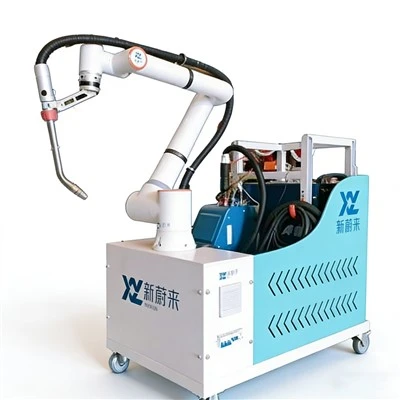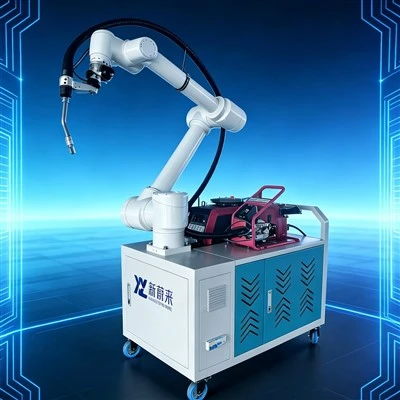

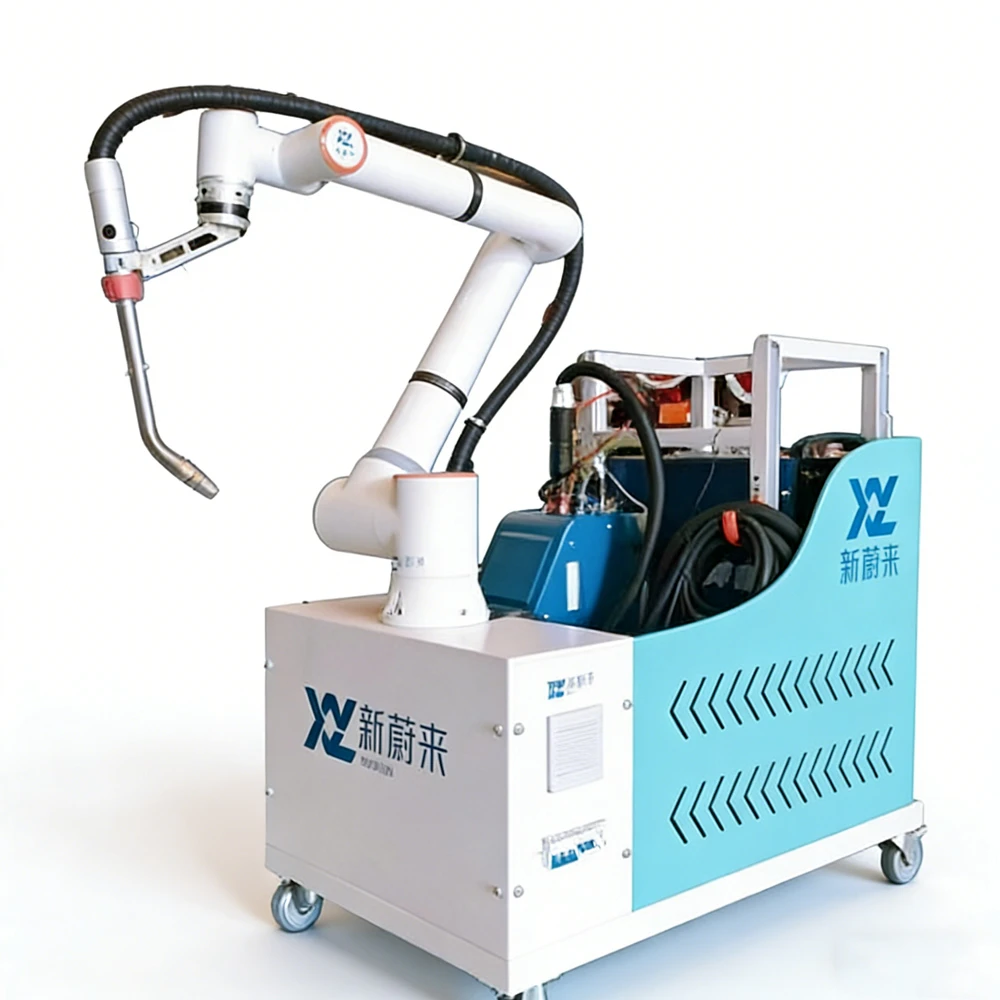
As core intelligent equipment for quality improvement and efficiency enhancement in industrial welding, the Mobile Welding Robot achieves prominent productivity gains compared with conventional manual welding and fixed welding robots. Improvements cover operating hours, processing accuracy, workflow losses, and mass‑production capacity, effectively resolving long‑standing industrial pain points such as low efficiency, frequent rework, and limited output. It meets production‑expansion requirements for various large‑and‑medium‑scale welding applications. To begin with, round‑the‑clock continuous operation breaks time constraints imposed by human welders. Manual welding is heavily affected by physical fatigue, shift schedules, mental states, and weather conditions. A welder's actual effective working time only reaches six to seven hours per day. Extended working periods bring slower operation speeds, declining accuracy, and more mistakes, with mandatory rest and shift changes preventing non‑stop production. However, the Mobile Welding Robot experiences no fatigue and requires no rest. It can run continuously 24 hours with only short breaks for maintenance and wire replacement. Its effective working duration is more than doubled versus manual welding, directly lifting total production output.
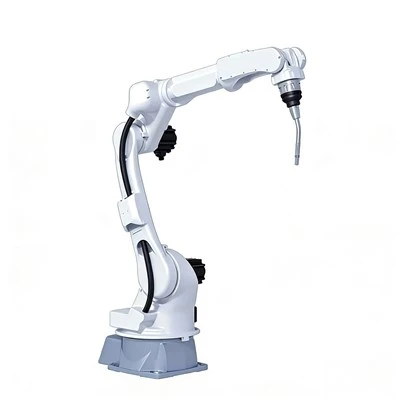
Secondly, high precision and stable performance cut rework losses and raise effective working efficiency. Manual‑welding quality depends heavily on operators' practical experience. Welding techniques, travel speed, and penetration control vary among welders and across different time points. Defects including uneven weld beads, incomplete fusion, missed welds, and workpiece deformation frequently occur. Subsequent grinding, repair, and re‑welding consume enormous time and delay overall construction schedules. The Mobile Welding Robot executes pre‑programmed trajectories accurately. Welding speed, molten‑pool control, and weld formation remain highly uniform with extremely low defect and rejection rates. Hardly any rework is required, so nearly all operating hours contribute to valid output. Waste caused by manual errors is minimized and real working efficiency is greatly elevated.
Furthermore, mobility optimizes workflows and cuts auxiliary time substantially. Traditional fixed welding robots demand frequent handling and clamping of large‑size workpieces. For bulky structures, engineering machinery, and storage tanks that cannot be relocated easily, tooling alignment and fixture setup take massive time and complicate processes. The Mobile Welding Robot travels flexibly and approaches welding spots actively. Heavy‑duty workpiece lifting, relocation, calibration, and fixation are no longer needed. Auxiliary time for single‑piece processing can be reduced by over 60 %, shortening individual welding cycles and accelerating work turnover. Quick repositioning supports multi‑station and multi‑workpiece operations simultaneously without building numerous fixed welding stations, improving site utilization and task coverage.
Additionally, intelligent collaborative capability further amplifies production advantages. The Mobile Welding Robot can link with production lines and material‑handling equipment to realize automated sequences of feeding, welding, and unloading without manual intervention, removing bottlenecks and waiting periods between successive processes. For standardized mass‑produced workpieces, pre‑saved programs can be invoked with one click instead of repeated parameter tuning, accelerating operation cycles. In long‑term service, human‑caused schedule delays are reduced, and project progress stays stable and predictable. In terms of single‑unit processing speed, batch throughput, and schedule management, the Mobile Welding Robot presents distinct advantages. It serves as key intelligent hardware for cost reduction, efficiency growth, and quality upgrading in modern welding industries, delivering productivity three to five times higher than manual welding and fitting industrial‑upgrading demands across diverse welding sectors.