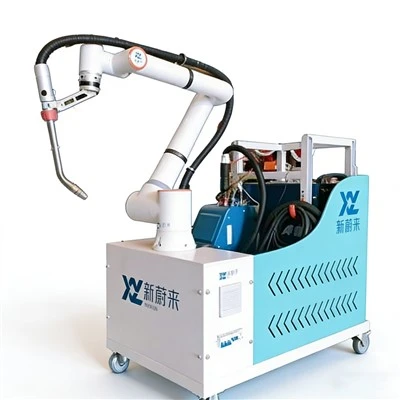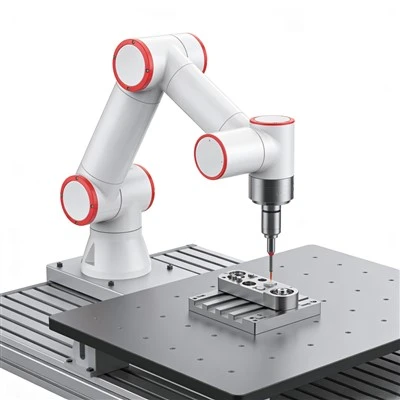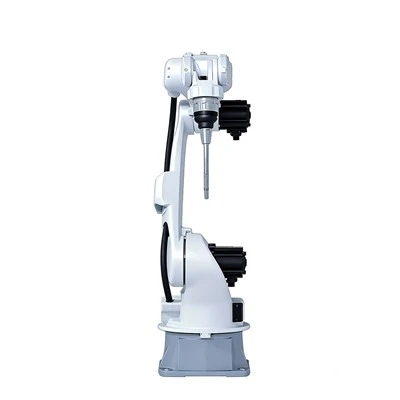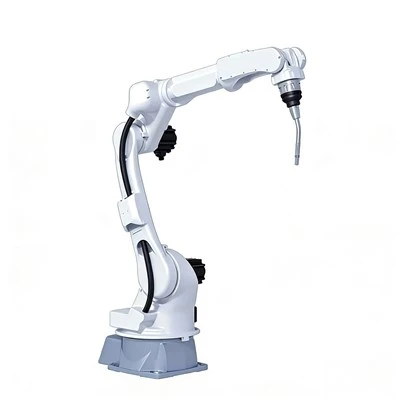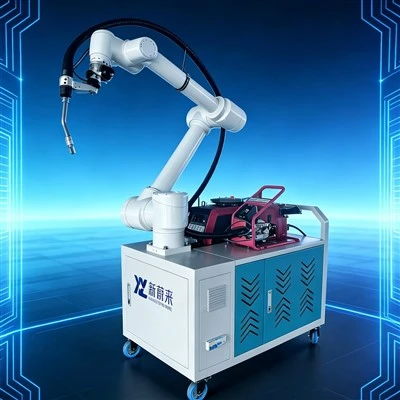

The Mobile Welding Robot presents objective safety risks in industrial working scenarios, yet all such risks are manageable rather than extremely hazardous and uncontrollable. Its potential hazards stem from three major sources: inherent welding operations, the movement‑related features of the equipment, and on‑site working environments. Fully identifying risk categories, root causes, and prevention measures serves as a core prerequisite for safe equipment operation. First come the intrinsic safety risks of welding work, shared by both manual welding and robotic welding. Intense arc light generated during welding emits harmful ultraviolet and infrared rays. Direct, prolonged exposure without protection may damage the corneas and burn skin, resulting in photokeratitis, skin redness, and peeling. High welding temperatures melt metals and produce substantial welding fumes containing heavy‑metal particles such as manganese and zinc, along with toxic gases. Long‑term inhalation impairs the respiratory tract and nervous system and endangers operators' physical health. Moreover, flying welding sparks and hot molten slag can easily burn personnel. Combustible materials including wood chips, paint, and exposed cables present on‑site may trigger fire accidents.
Second are mechanical operational risks unique to mobile equipment, which distinguish it from fixed welding robots. Equipped with autonomous travelling and trajectory‑following functions, the robot may experience travelling offset and body jolts if the ground surface is uneven or cluttered with debris. This brings about welding trajectory errors and may further cause body tilting and wheel jamming. Power and control cables dragged along with robot movement may suffer sheath abrasion over extended service, leading to insulation damage, electric leakage, and short circuits. These not only create equipment breakdowns but also pose electric‑shock threats. In addition, if working zones lack physical isolation and staff step into operating areas unexpectedly, delayed responses from collision‑avoidance sensors may result in human‑machine collisions and squeezing injuries.
Third are secondary risks induced by site conditions and improper human operations. Some worksites are open‑air, humid, or heavily dusty. Humidity weakens equipment insulation and raises electric‑leakage risks. Excessive dust accumulating on circuits, sensors, and heat‑dissipation ports reduces sensor sensitivity, causes poor heat dissipation, and triggers overloads and unintended movements. Safety hazards rise sharply when operators remove protective hardware without authorization, run the unit beyond rated loads, fail to activate emergency stops in crises, or skip regular sensor calibration and maintenance. Besides, aging and failure of collision sensors, emergency braking systems, and temperature‑protection devices without timely replacement will disable safety safeguards and create hidden dangers.
It should be emphasized that the Mobile Welding Robot delivers far better safety performance than manual welding. Human welders stay fully exposed to hazardous conditions with inconsistent protection and higher error rates. In contrast, the robot integrates multi‑layer safety hardware including arc‑light shielding housings, interfaces for fume‑extraction accessories, intelligent collision‑avoidance sensors, one‑touch emergency stops, electric‑leakage protection, and overload temperature safeguards, eliminating most risks at the hardware level. Enterprises shall implement standardized management, keep work zones isolated and clean, and arrange periodic equipment servicing. Operators must wear required protective gear and follow standard procedures while completing regular safety training. Most accidents can be prevented to maintain safe equipment performance. Overall, the Mobile Welding Robot features manageable risks and superior safety performance, acting as intelligent industrial welding equipment with far higher safety indexes than manual‑welding solutions.