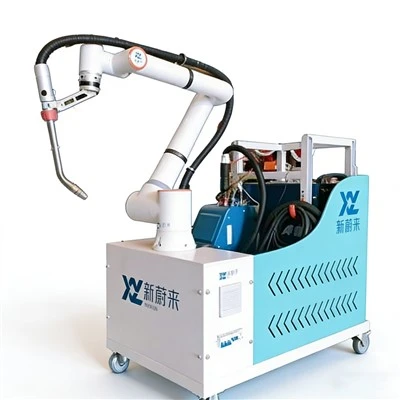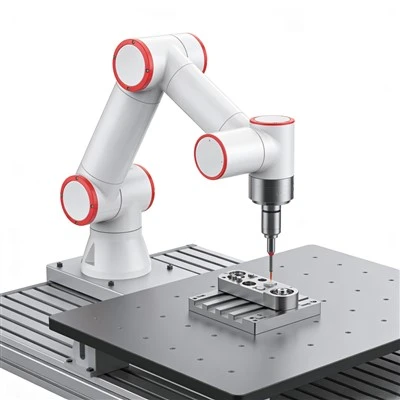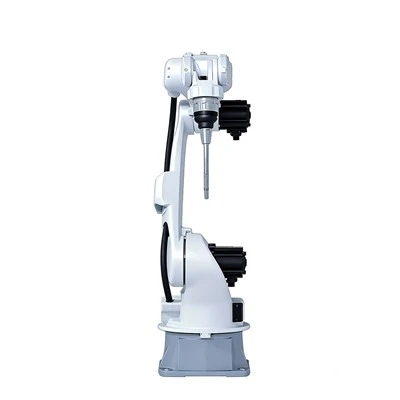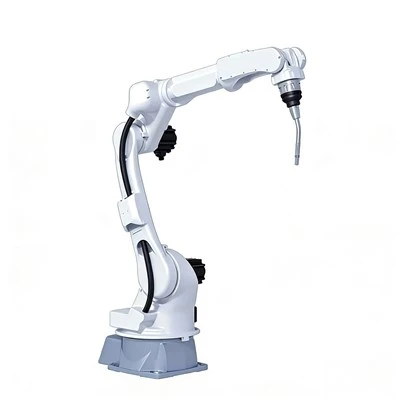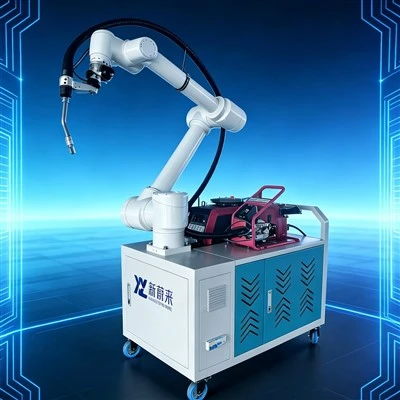

Featuring outstanding adaptability to workpieces and scenarios, the Mobile Welding Robot overcomes limitations of conventional welding equipment with narrow application ranges. It handles workpieces of diverse sizes, materials, and geometries and performs reliably in indoor standardized workshops, outdoor construction sites, high‑altitude locations, and on‑site repair environments. Representing one of the most versatile intelligent welding solutions available, it satisfies welding requirements across most industrial fields. From the perspective of workpiece dimensions, it covers both small and large‑size parts and solves the typical drawback of fixed robots that struggle with oversized components. For small standard parts such as hardware fittings and pipe segments, the robot locates tiny weld seams precisely and completes mass welding with consistent quality. For heavy‑duty workpieces difficult for traditional equipment, including steel frames, bridge components, pressure vessels, engineering‑machine bodies, and large‑bore pipelines, its travelling mechanism enables close access to different welding positions. Moving heavy workpieces is no longer necessary, and welding blind zones on extra‑large, overweight, and overlong parts can be addressed thoroughly.
Regarding workpiece geometries and weld types, complex welding structures are well supported. Manual welding and basic machines often struggle with irregular shapes and complicated seams, leading to uneven welding and missed joints. The programmable control system of the Mobile Welding Robot generates custom motion paths for straight seams, circumferential welds, curved arc joints, chamfered corners, and irregular profiles. Processes ranging from thin‑sheet precision welding and multi‑pass thick‑plate welding to pipe butt joints, frame assembly, and box sealing are all supported. Welding current, travel speed, and wire‑feeding parameters are adjusted to match structural characteristics, yielding well‑formed and uniform weld beads and resolving technical challenges for complicated components.
In terms of material compatibility, mainstream industrial metals are supported. Parameter modifications allow the Mobile Welding Robot to weld carbon steel, stainless steel, aluminum alloy, alloy steel, and galvanized sheets widely used in steel‑structure manufacturing, mechanical processing, hardware production, new‑energy industries, and municipal engineering. Thermal input is accurately regulated according to material melting properties to avoid common defects such as thin‑sheet burn‑through, insufficient penetration on thick plates, and oxidation‑induced incomplete fusion on aluminum parts. Its material coverage includes more than 90 % of metals applied in industrial welding activities.
For field operating conditions, multiple working environments are applicable. Inside standardized workshops, it carries out batch tasks and cooperates with production lines to raise plant output. At outdoor building and bridge construction sites, unrestricted by fixed stations, it relocates following construction progress. During equipment retrofitting and maintenance, it performs in‑situ repair welding on pre‑installed large‑size facilities, steel structures, and pipelines without component disassembly. It also works on elevated platforms and slightly uneven ground by adaptive travelling adjustments. Only extreme conditions such as heavy rain, severe sandstorms, or ultra‑high or ultra‑low temperatures impose restrictions. With basic protective measures taken, nearly all ordinary working environments are suitable. Overall, the Mobile Welding Robot boasts broad workpiece compatibility and scenario adaptability to fulfill welding demands across multiple industries and working conditions.