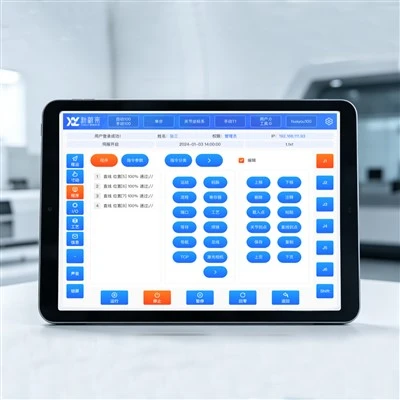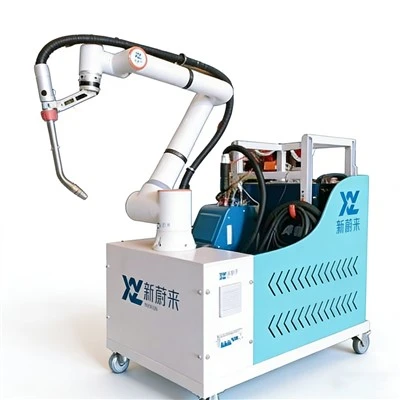

The ease of operating a Welding Collaborative Robot depends on the equipment's operating system, the experience of the operator, and the company's production process. For workers who are using a robot for the first time, it may take some time to become familiar with the control interface, work procedures, and operating precautions. However, with proper training and hands-on practice, operators can gradually master the basic functions and operating methods.
During daily operation, workers first need to understand the basic operating logic of the Welding Collaborative Robot, including how the robot moves, how it performs welding tasks, and how different working steps are coordinated. Once these fundamentals are understood, operators can more easily determine whether the robot is performing according to the intended workflow.
Task setup is another important part of operation. Based on actual production requirements, operators need to arrange the robot's working process appropriately. For repeatedly produced workpieces, once the relevant process has been set up, subsequent production can follow the established workflow. This reduces the need to perform complicated setup procedures each time the same type of workpiece is produced.

For different types of workpieces, operators may need to adjust the working process according to the workpiece position and actual welding locations. Therefore, operators should understand not only how to use the robot but also the welding process itself. Combining robot operation with practical welding requirements allows the equipment to perform more effectively.
During operation, workers should also monitor the robot's working condition. For example, they can observe whether the robot is operating normally, whether the welding process remains stable, whether workpieces are positioned correctly, and whether anything in the working area could interfere with operation. Regular observation can help identify abnormal conditions at an early stage and prevent them from continuously affecting production.
Proper operator training is important for companies using Welding Collaborative Robots. Training can cover basic operation, workflow setup, routine inspection, cleaning and maintenance, and safety precautions. Once operators are familiar with these areas, they can use the robot more effectively and reduce the risk of improper operation caused by insufficient familiarity.
Companies can also establish clear and straightforward operating procedures based on their actual production conditions. For example, before starting work, operators can inspect the equipment and working area and confirm that the workpieces are positioned correctly. During operation, they can monitor the robot's working condition. After completing the task, they can stop the equipment according to the proper procedure and perform necessary cleaning. Developing consistent operating habits can make daily use more organized and efficient.
Therefore, although a Welding Collaborative Robot is an automated piece of equipment, it does not necessarily require only specialized robotics engineers to operate it. With appropriate training and sufficient familiarity with the equipment and workflow, regular production personnel can gradually master basic operation. The actual difficulty depends largely on the equipment's operating design, the production tasks, and the operator's level of familiarity.