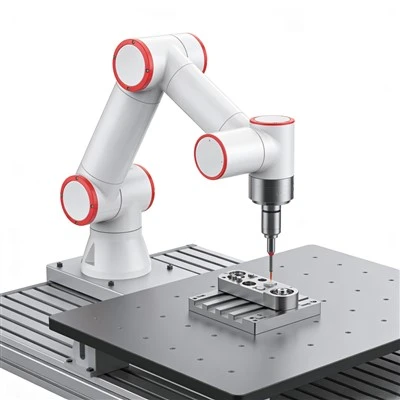
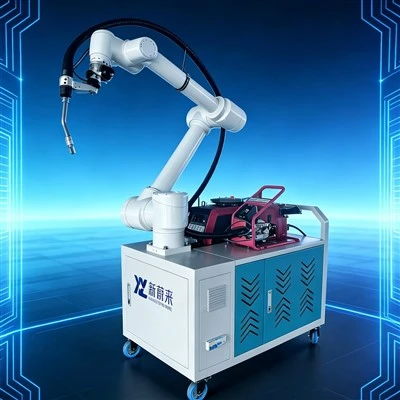
Daily maintenance of the CR620 Collaborative Robot is critical for long‑term high‑precision and stable operation, lowering failure rates and extending overall service life. It follows a hierarchical maintenance principle:"daily basic care, weekly special inspections, monthly in‑depth overhauls and quarterly accuracy calibration". Aligned with its lightweight human‑robot collaborative features, these practical procedures fit standard industrial production scenarios. Basic cleaning must be completed after daily shutdown. Operators should use a lint‑free dry cloth to wipe the robot main body, gaps around each joint, end‑of‑arm actuators and base surfaces, thoroughly removing accumulated dust, debris and light oil contamination generated during production. Do not use highly corrosive or strongly dissolving cleaners such as acetone or alcohol, as these may damage surface coatings, joint sealing components and cable insulation layers. Direct water rinsing of the robot is forbidden to prevent water vapor from seeping inward and causing electrical failures. After cleaning, visually inspect the unit for scratches, deformation, aging and physical damage.
Before daily startup, complete pre‑operation checks. Manually jog the robotic arm through its full motion range, observe joint performance, and identify jamming, abnormal noise or shaking. Inspect power cables, signal cables and joint connecting wires for wear, sharp bending and loose connections. Confirm that end‑of‑arm fixtures are securely mounted without offset or looseness. Meanwhile, check the controller display for fault alarms and abnormal parameters, and verify that emergency‑stop and collision‑detection safety functions work properly to guarantee safe human‑robot collaboration. Perform special‑purpose maintenance every week. Place priority on joint‑lubrication inspections. The reducers inside the CR620 Collaborative Robot are precision components. Check operating smoothness weekly and replenish special lubricating grease every three months per official requirements. Do not mix non‑standard lubricants; otherwise, reducer wear and accuracy drift may occur. Clear dust and debris from heat‑dissipation air outlets on both the controller and robot body to ensure proper heat dissipation and avoid shutdown triggered by overtemperature overload.
Monthly maintenance focuses on electrical systems and connecting assemblies. Fully inspect all electrical terminals and plugs for oxidation, looseness and corrosion. Tighten loose connectors and remove oxidation deposits where needed. Verify reliable equipment grounding to eliminate electric‑leakage risks and signal interference. Calibrate the clamping accuracy of end‑of‑arm actuators as well as sensor sensitivity to guarantee precise grabbing and detecting motions. Quarterly maintenance emphasizes accuracy calibration and deep‑level diagnostics. Calibrate the robot' s repeat‑positioning accuracy via dedicated debugging software to satisfy production‑process requirements. Comprehensively test operating parameters of motors, reducers and drivers to detect latent faults. Use official dedicated maintenance tools to complete firmware upgrades, controller‑parameter backups and restorations, optimize operating algorithms and patch system vulnerabilities. In addition, standardize daily operating procedures. Avoid over‑load operation and violent cable tugging. For long‑term idle periods, cut off power and store the robot in dry, dust‑free surroundings. Conduct periodic power‑on self‑tests to sustain continuous and stable performance of the CR620 Collaborative Robot.

 English
- English
- Français
- Deutsch
- 日本語
- Italiano
- Español
- Português
- русский
- 한국어
- Malti
- Čeština
- O'zbek
- Latviešu
- magyar
- Việt Nam
- فارسی
- українська
- Bai Miaowen
- हिंदी
- Norsk
- Srbija jezik (latinica)
- Kreyòl Ayisyen
- עברית
- Ελληνικά
- dansk
- bosanski
- Türkçe
- اردو
- Lietuvių
- slovenščina
- Svenska
- ไทย
- íslenska
- Cymraeg
- Gaeilgenah Éireann
- hrvatski
- slovenčina
- România limbi
- Polski
- عربي
- Català
- Eesti
- Български
- Nederlands
- বাংলা
- Indonesia
- Melayu
- suomi