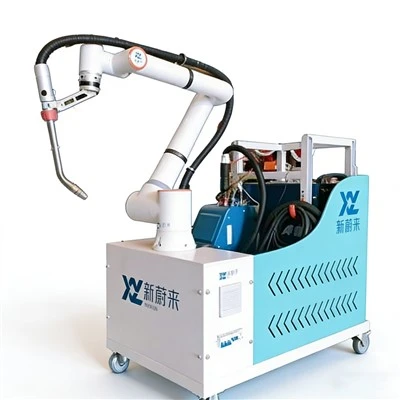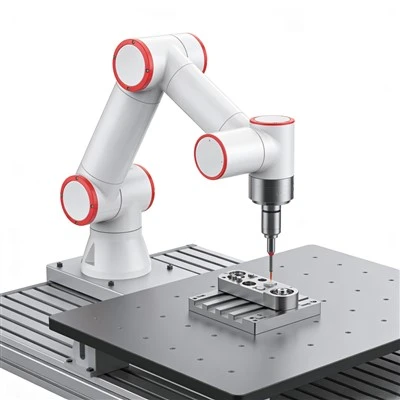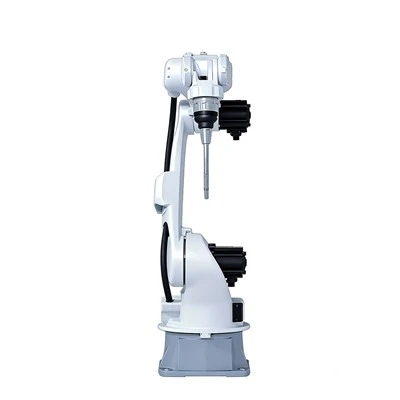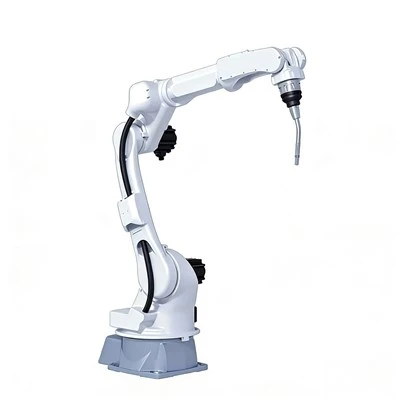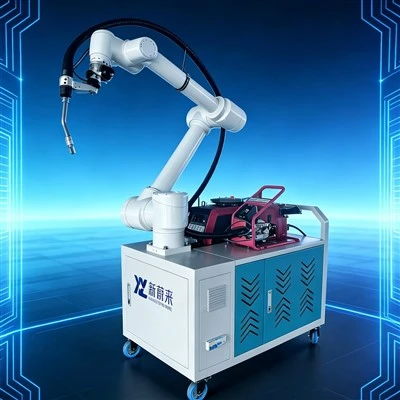


Featuring an optimized mechanical structure as an industrial‑grade high‑precision collaborative robot, the CR620 Collaborative Robot exhibits faint vibration and outstanding smoothness under standard operating conditions, fully meeting the requirements for precision‑oriented industrial production. This represents one of its core performance advantages. Fitted with high‑performance closed‑loop servo‑drive systems and high‑precision planetary reducers, its transmission mechanism boasts minimal clearance, which mechanically reduces jitter and positional wandering during motion. Its proprietary full‑perception AI flexible‑control technology dynamically adjusts motor speed, torque and motion trajectories in real time. It accurately restrains impact‑induced vibration at start‑stop moments and resonant jitter during constant‑speed movement, greatly mitigating drawbacks such as jerky start‑stop behavior and prominent vibration found on conventional industrial robots.
The CR620 Collaborative Robot delivers favorable vibration performance in regular application scenarios. During low‑speed human‑robot collaborative assignments including precision‑part assembly, visual inspection, PCB insertion and small‑part handling, tangible vibration is nearly absent from the unit. End‑effector trajectories remain stable and repeat‑positioning accuracy stays unaffected. Even for high‑speed cyclic workflows such as mass screw tightening, small‑workpiece palletizing and dispensing, only slight and uniform normal mechanical vibration occurs, which is barely detectable by the naked eye. It will not cause workpiece offset, process errors, or interfere with nearby equipment and operators. Its low‑noise and low‑vibration characteristics suit continuous routine shop‑floor production.
Marked vibration of the CR620 Collaborative Robot signals an abnormal faulty state with identifiable root causes for targeted troubleshooting. The first category covers installation‑related issues. If the robot base is mounted unevenly, the workbench wobbles, or anchor bolts become loose, resonance will occur and produce heavy vibration. Re‑level the base and tighten all fasteners to secure a stable mounting platform. Second, over‑load operation creates insufficient motor torque and unbalanced force distribution across transmission structures, resulting in shaking. Operate strictly within the rated‑load envelope and never exceed load limits. Furthermore, insufficient joint lubrication, worn reducers, cable dragging and jamming after extended service, unreasonable motion‑parameter settings, or abrupt trajectory changes can also trigger abnormal vibration. Offset mounting of end‑of‑arm fixtures and unbalanced workpiece clamping shift the center of gravity and generate jitter during movement. When abnormal vibration appears, shut down the machine immediately. Troubleshoot installation status, load conditions, mechanical structures and parameter settings item‑by‑item. Resume operation only after completing maintenance and calibration. Sustained abnormal vibration accelerates component wear, degrades working accuracy and shortens equipment service life. Routine checks of fastening structures and motion‑parameter calibration within daily‑maintenance workflows help prevent vibration‑related failures.