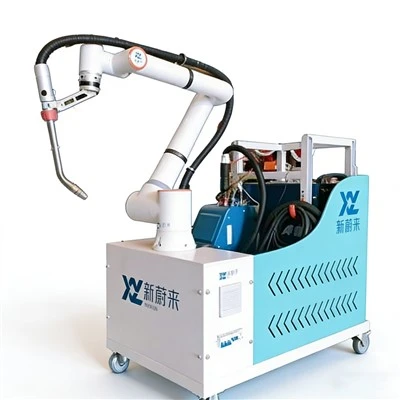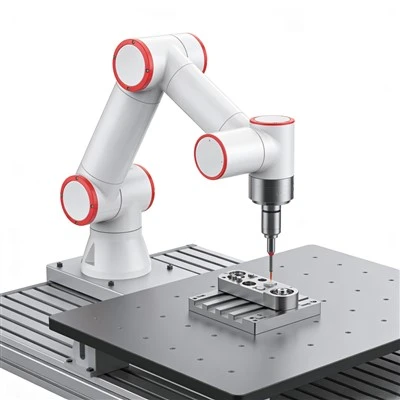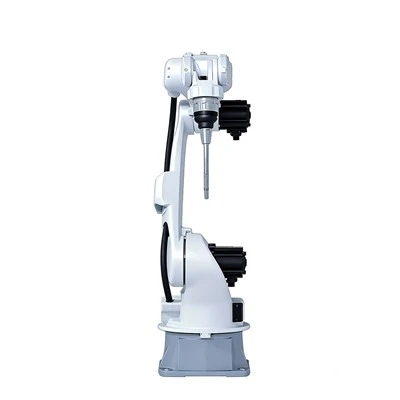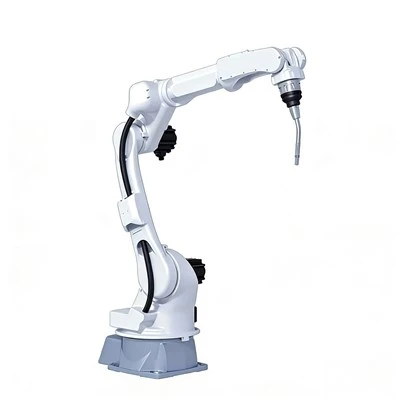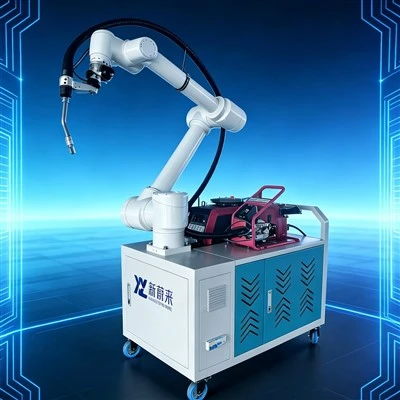


As an industrial-grade intelligent automation device, Collaborative Cobot Palletizer features high stability and durability. Its service life is mainly determined by four key factors: material quality, core configuration, working conditions and operation and maintenance specifications. Boasting standardized industrial service life and far superior durability compared with ordinary automation equipment and manual operation modes, it offers a long service cycle and low depreciation cost, serving as a highly cost-effective long-term production asset.
In terms of industrial standards and basic service life, genuine Collaborative Cobot Palletizer units adopt industrial-grade aluminum alloy frames, precision servo motors, imported transmission bearings and high-end force sensors. All core components have passed rigorous wear, vibration and compression resistance tests to support 24-hour continuous industrial operation. In standard normal-temperature, dust-free and rated-load industrial environments, the overall service life reaches 8 to 12 years, and well-maintained units operating under premium conditions can achieve a service life of up to 15 years. Compared with the 3 to 5-year service life of civilian automation equipment, its exceptional durability fully meets enterprises' long-term production iteration requirements.
In terms of component lifespan, core components and wearable parts have distinct service cycles and can be maintained and replaced separately to avoid full equipment scrapping. Long-service-life components, including core power units, control systems, visual perception systems and body frames, operate consistently throughout the equipment's entire service life with no routine failures or mandatory replacement required. Short-term wearable parts mainly include fixture suction cups, transmission belts and sealing gaskets, with a service cycle of 1 to 3 years. As low-cost, easily replaceable conventional consumables, they can restore the equipment's original operating performance without affecting the overall service life, effectively reducing long-term operational costs.
Working conditions including load capacity, operating environment and operational standardization are critical factors affecting service life. Overloading is the primary cause of shortened service life. Long-term operation beyond the rated load accelerates the wear of motors, bearings and transmission structures, resulting in reduced precision and frequent malfunctions. Operating within the rated load range effectively protects core components. In terms of environment, normal-temperature, dry and non-corrosive workshop conditions cause minimal equipment degradation. Humid, dusty and corrosive environments accelerate component aging, which can be effectively mitigated through standardized dustproof, moistureproof and anticorrosive measures. In addition, avoiding violent collisions, forced start-stop operations and frequent emergency stops significantly reduces equipment failure risks.
Daily operation and maintenance are essential for extending service life. Standard maintenance protocols include daily basic upkeep, quarterly inspections and annual in-depth maintenance. Daily routines involve cleaning surface dust, inspecting suction cup tightness and verifying operating parameters. Quarterly maintenance covers detecting transmission component wear, calibrating positioning accuracy and fastening connecting parts. Annual maintenance includes comprehensive full-machine inspection, system upgrading and component lubrication. A standardized maintenance system eliminates potential faults in advance, prevents minor issues from escalating into major failures, stabilizes operating accuracy, and effectively extends the equipment's service life by 2 to 3 years.
In summary, Collaborative Cobot Palletizer features a long inherent service life, easy maintainability, repairability and low depreciation with no risk of full scrapping, delivering outstanding long-term cost performance. With an 8–12 year service life, it achieves extremely low annual depreciation costs. Combined with its 24-hour high-efficiency operational capability, it consistently helps enterprises reduce operational costs and improve production efficiency, fully complying with the long-term stable operation requirements of industrial automation equipment.