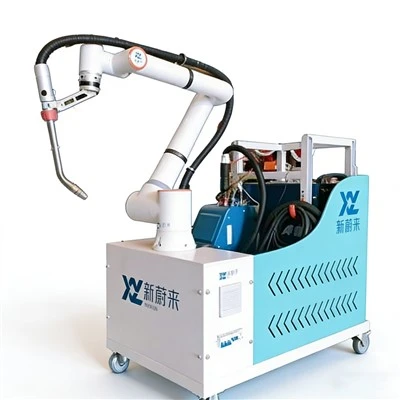
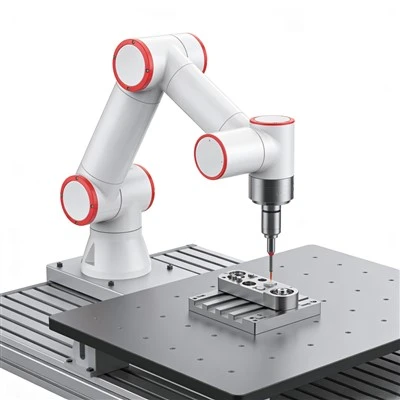
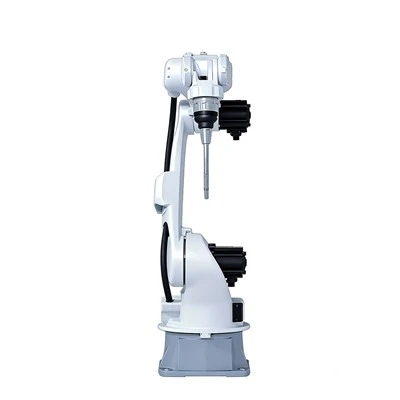
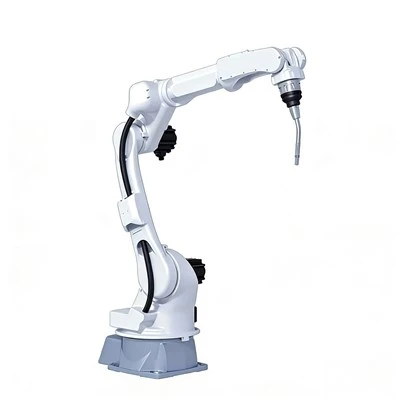
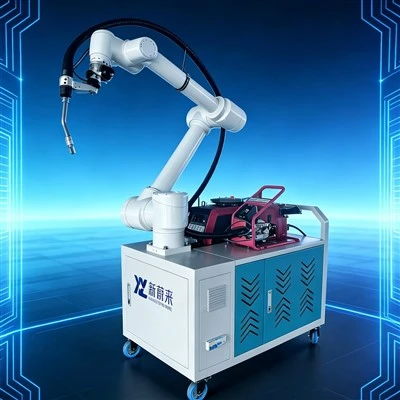
Conventional manual welding represents physically demanding labor. Long-term welders commonly face excessive physical consumption, recurring musculoskeletal strain and heavy work pressure. This is one core factor behind widespread difficulties in recruiting and retaining welding workers, along with high staff turnover in the welding sector. One of the core strengths of the Mobile Collaborative Welding Robot is fundamentally reducing welders' workload, reshaping welding workflows and freeing operators from the strenuous physical demands of traditional manual welding.
In manual welding operations, welders must hold the welding torch manually throughout the process. For different workpieces and welding positions, operators stay in sustained strenuous postures including bending, stooping, raising arms and twisting sideways, often for multiple hours per session. Repeated long-term operation consumes massive physical energy and easily causes chronic strain to the lumbar spine, cervical vertebrae, arms and joints, continuously harming physical health. Moreover, repetitive welding of mass-produced workpieces and repeated seam work are monotonous and exhausting tasks that form the primary source of physical burden for welders.
The intelligently collaborative mobile welding robot perfectly takes over high-intensity, repetitive manual tasks. In actual production, the robot independently handles full-process welding of workpieces, uniform seam movement, sequential overlapping processes and prolonged continuous welding. No manual torch holding or sustained awkward postures are required. The welder's workload is greatly simplified, limited to simple point teaching before work, workpiece positioning, on-site safety supervision and minor condition adjustments during operation.
This transformation of working patterns liberates welders from intensive physical labor. Operators shift focus from hands-on physical execution to intelligent supervision. They avoid physical exhaustion from prolonged stooping and repetitive mechanical welding motions, fundamentally eliminating musculoskeletal strain, energy depletion and excessive fatigue resulting from welding work. Even during mass production and tight delivery schedules requiring extended working hours, welders can complete production tasks comfortably with simple monitoring instead of heavy physical exertion.
At the same time, the Mobile Collaborative Welding Robot can replace human workers for high-fatigue tasks such as overhead welding, welding in confined spaces and prolonged continuous welding, further reducing physical burdens imposed by special working conditions. Long-term deployment greatly lowers welders' work pressure and physical wear, improves job satisfaction and helps enterprises resolve recruitment difficulties and staff turnover caused by chronic physical strain among senior welders. It safeguards production efficiency while fully prioritizing occupational health, serving as core equipment for lightweight and intelligent upgrading of workshop welding workflows.

 English
- English
- Français
- Deutsch
- 日本語
- Italiano
- Español
- Português
- русский
- 한국어
- Malti
- Čeština
- O'zbek
- Latviešu
- magyar
- Việt Nam
- فارسی
- українська
- Bai Miaowen
- हिंदी
- Norsk
- Srbija jezik (latinica)
- Kreyòl Ayisyen
- עברית
- Ελληνικά
- dansk
- bosanski
- Türkçe
- اردو
- Lietuvių
- slovenščina
- Svenska
- ไทย
- íslenska
- Cymraeg
- Gaeilgenah Éireann
- hrvatski
- slovenčina
- România limbi
- Polski
- عربي
- Català
- Eesti
- Български
- Nederlands
- বাংলা
- Indonesia
- Melayu
- suomi