

If you've ever walked into a warehouse at 2 a.m. and watched a palletizer struggling to stack a box of cereal next to a case of bottled water, you get why this question matters. I'm Jake, part of the palletizing robot team here, and we spend way too much time fielding questions from warehouse managers who swear their old robots can't keep up with mixed-SKUD shifts. The thing is, most people don't realize that handling different product dimensions isn't just about a robot's arm reaching-It's a whole system of small, smart details working together. Let's break this down like we're chatting over a coffee (no stuffy engineering jargon, promise).
First, let's talk about why this is such a big pain point. Back in the day, you'd see robots locked to a specific job-one for soda cans, another for big pallets of frozen pizza. If you had to swap to a different product, you'd spend 2 hours switching end effectors, adjusting pallet heights, and calibrating everything until your team was ready to throw a wrench. Now, with e-commerce and smaller batch sizes booming? Mixed SKUs are nonstop. A single pallet might have a 1-liter soda case, a 5-pound bag of rice, and a small box of dog treats, all stacked perfectly to avoid tipping. That's where a good palletizing robot shines-but only if it's built to adapt, not just repeat its last move.
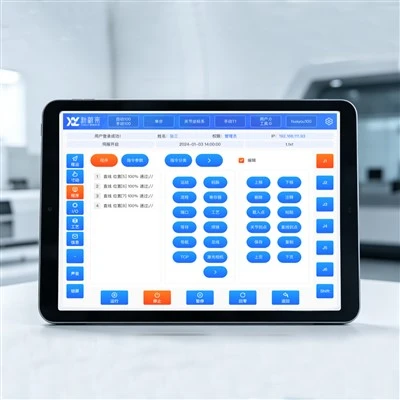
Let's start with the brains of the operation: the software. You can have the fanciest arm on the planet, but if its control system is rigid, it's useless for different dimensions. Our teams don't just sell a Palletizing Robot and call it a day-we build software that lets you input a product's size (length, width, height, even weight) in two clicks, no coding degree needed. Wait, let me point to some of our actual gear here: our line of Collaborative Cobot Palletizer comes with pre-built palletizing patterns stored right in the control software. So if you're switching from 12x12 inch boxes to 8x8 inch ones, you don't have to manually program every position-just pick the pattern that fits the new size, and it adjusts the arm's path automatically. That's a game changer for small to mid-sized warehouses that don't have a dedicated robotics engineer on staff.
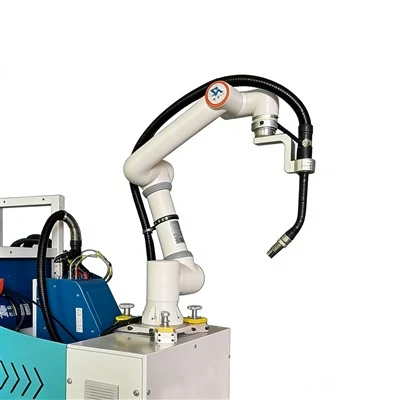
But software only goes so far. The next big piece is the end effector-aka the "hand" that grabs the product. This is where a lot of cheap palletizing robots fall flat. If you have a gripper made only for flat boxes, it can't handle round water bottles or irregularly shaped bags. Our approach? We build flexible, interchangeable end effectors that work across multiple product types, or design the system to switch between them on the fly. For example, our CR30 Collaborative Palletizing Robot can swap from a vacuum gripper (great for smooth, flat boxes) to a mechanical gripper (perfect for rigid cases) in under 90 seconds. That's way faster than the 30 minutes it takes for older robots. And if you're dealing with really small or oddly shaped stuff, we can even customize grippers to fit, no custom programming required.
Next up: adaptive vision systems. This is the secret sauce most people don't talk about. Think of it as the robot's "eyes" that check each product before it grabs it. Our Collaborative Robot Palletizer Systems come with 2D and 3D cameras mounted above the infeed conveyor. These cameras scan every product that comes by, log its exact dimensions, weight, and even how it's oriented on the conveyor, then send that info to the robot's control system. So if a box is slightly off-center (like if a worker didn't set it perfectly), the vision system fixes the robot's grip path in real time, no manual adjustments. We had a customer last month-they distribute snack foods-who used to have to re-stack 1 out of every 10 pallets because of misaligned products. Now? They're down to 1 in 100, just from adding the vision system to their existing robot. That's less waste, fewer injuries from redoing work, and way faster throughput.
Weight is another big factor when dealing with different products. A robot that can lift a 50-pound case of dog food might struggle with a stack of 10-pound bags that're soft and slippery. Our CR40 Collaborative Palletizing Robot has a 40-kilogram payload capacity, which is bigger than our smaller models, but it also has torque sensors in each joint. If it grabs a bag of flour that's slippery, the sensor detects how much force it's using, and adjusts the gripper's pressure so it doesn't crush the bag or drop it. No more ruined products and wasted time from broken pallets. And for lighter products, like small boxes of electronics, the system can dial down the grip pressure so it doesn't scratch the packaging-something rigid robots can't do.
Wait, let's talk about flexibility with pallet sizes too. A lot of companies don't just have one pallet size-sometimes you're using standard 48x40 inch pallets, other times smaller half-pallets for online orders. All our palletizing robots let you save multiple pallet layouts in the software. So if you switch from full pallets to partial ones, you just select that layout, and the robot adjusts its stacking height and the distance between layers automatically. No need to re-calibrate the arm's end position for every pallet size. We had a craft beverage client who had to switch between full pallets and half-pallets every day for different stores, and their old robot would take an hour to switch. Now, with our system? They do it in 2 minutes flat. That's the kind of small win that adds up to way more output and less downtime.
Of course, people ask about collaborative vs. traditional robots here, and that's a valid question. A lot of warehouses are worried about robots taking over, but collaborative palletizing robots are designed to work alongside humans, not replace them. For example, if a worker needs to adjust a product or fix a jam, the robot has force-sensing technology that stops immediately if it touches something or someone. That's why these robots are great for small warehouses that don't have big safety cages around their production lines. And when it comes to handling different dimensions, collaborative models are actually more adaptable because their control systems are built to be user-friendly, not just for high-volume, big-batch factories.


Let's be real-no system is perfect. There are limits, of course. If you're handling super irregular, unstable products that are way too big or heavy, you might need a custom solution. But for 90% of the products we work with (boxes, cases, bags, bottles, small containers), our standard line of Palletizing Robot gear handles it without breaking a sweat. The key is that these systems aren't one-size-fits-all-they're built to learn and adjust as your product line changes, which is exactly what most warehouses need right now.
Here's the thing we tell every customer: if you're still manually stacking pallets or fighting with a robot that can't switch products quickly, you're leaving money on the table. Downtime from re-calibrating a robot costs thousands of dollars a day, and damaged products or safety incidents add even more. The good news is you don't have to overhaul your entire warehouse to make this work-you can start small, add a collaborative palletizer, and scale as you go.
If you're tired of your current robot struggling with mixed dimensions, or if you're just exploring options to cut down on manual labor, we're here to help. Our team can walk you through what gear makes sense for your specific products, whether that's the CR30 for smaller facilities, the CR40 for heavier loads, or a full Collaborative Robot Palletizer Systems setup tailored to your line. Reach out to us to chat through your needs-no sales pitch, just real advice from people who work with these robots every day.
References
- Automated Palletizing: Optimizing Flexibility for Mixed Production, Robotic Industries Association, 2023.
- Collaborative Robot Payload and End Effector Compatibility, International Federation of Robotics, 2022.
- Warehouse Productivity Trends: Mixed SKU Handling, Supply Chain Digest, 2024.
- Force-Sensing Technology in Industrial Robots, Journal of Manufacturing Systems, Vol. 45, 2022.
- 2024 Palletizing Robot Market Report, ABB Robotics Global, 2024.