

If you've walked through a fabrication shop in the last 10 years, you've probably seen a welding robot doing heavy lifting-producing consistent, high-quality welds without the fatigue or error that comes with manual welding. As a supplier of automated welding equipment, I get asked one question more than any other: What types of welding can the ARC1440 Welding Robot perform? It's a fair question; not all welds are created equal, and a robot that works for automotive frame welding might not be the right fit for thin-gauge aerospace parts. Let's break down exactly what this model brings to the table, and how it fits into a manufacturer's workflow-plus, where it stands against other solutions like the ARC2010 Welding Robot for different needs.
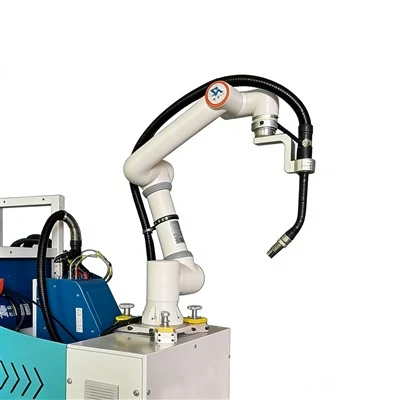
First, let's set a quick baseline: the ARC1440 is a 6-axis articulated robot built for precision arc welding, designed to handle repetitive, high-volume tasks while maintaining the tight tolerances that keep production moving. If you're new to automated welding, you might start by looking at a general overview of options with the Welding Robot page, which covers the core use cases of these systems before diving into model specifics. For context, the ARC1440's reach (1440mm, hence the name) is a sweet spot for medium-sized workpieces-think truck trailer frames, agricultural equipment parts, or medium-duty structural steel-so it's designed to execute the most common arc welding processes that shops rely on every day.
Let's start with the workhorse: Gas Metal Arc Welding (GMAW), more commonly known as MIG welding. This is the most widely used arc welding process for industrial applications, and the ARC1440 handles it seamlessly. MIG uses a continuous solid wire electrode fed through a welding gun, paired with a shielding gas (like argon or CO2) to protect the weld pool from atmospheric contamination. What makes the ARC1440 stand out here is its ability to adjust wire feed speed, travel speed, and gas flow in real time-even for complex, multi-pass welds. For example, a manufacturer welding 1/4-inch steel plates can program the robot to switch between fast travel speeds for flat seams and slower, controlled speeds for vertical welds, eliminating the porosity or spatter that plagues manual MIG. This consistency is why so many shops that made the jump to automation started with MIG on their first robot, and the ARC1440 is optimized for that exact task.


Next up: Flux-Cored Arc Welding (FCAW). A close cousin to MIG, FCAW uses a tubular wire filled with flux instead of a solid core, which generates its own shielding gas-no external gas cylinder required. That makes it ideal for outdoor welding or jobs where access for a gas line is limited, like construction site fabrication or repairing heavy machinery parts in remote locations. The ARC1440 is built to handle FCAW's higher heat output and larger wire size (up to 1.6mm, depending on the model), so it can handle thicker materials (up to 12mm in a single pass) without compromising on quality. I've had customers tell me that switching from manual FCAW to the ARC1440 cut their weld time in half on large agricultural plow beams, because the robot maintains a consistent contact tip-to-work distance-something manual welders struggle with when working long hours. It's worth noting that while FCAW is a core capability, the robot can also be configured for multiple processes, which we'll touch on later.
The third major process the ARC1440 excels at is Gas Tungsten Arc Welding (GTAW), or TIG welding. TIG is the go-to for high-precision, clean welds on thin materials, stainless steel, aluminum, or exotic metals like titanium-think parts for food and beverage equipment, aerospace components, or medical devices that demand a smooth, non-porous finish. Manual TIG is famously difficult, requiring years of practice to keep a steady hand and balance the heat, but the ARC1440 eliminates that variability. Its high-resolution positioning system lets it hold accuracy within 0.05mm, so it can follow tight, intricate seams on parts like stainless steel piping or aluminum motorcycle frames without burning through the material. We've had a customer in the solar industry use the ARC1440 for TIG welding thin aluminum solar panel frames, and they reported a 90% reduction in rework compared to manual TIG-game-changing for a product where even a tiny weld defect can affect performance.
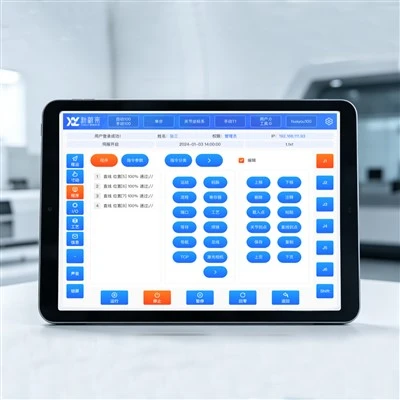
Now, a lot of people ask if the ARC1440 can do anything beyond these three. The short answer is: yes, with the right integration. While it's primarily designed for arc welding, it can also be adapted for other processes with end-of-arm tooling changes, but let's focus on its native capabilities first. One of the biggest advantages of modern welding robots like the ARC1440 is their compatibility with the Intelligent Welding Industrial Robot framework, which lets you program multiple process modes in a single workflow. For example, a shop might use MIG for the bulk of a weld, then switch to a lower-heat TIG pass for the final finish-something the ARC1440 can execute without stopping to re-program the entire sequence. That flexibility is why more manufacturers are moving toward smart welding solutions, and the Industrial Robot Smart Welding page has details on how these systems integrate with your existing production line, from data tracking to remote monitoring.
To put this in perspective, it's helpful to compare the ARC1440 to a similar model, like the ARC2010 Welding Robot, which has a longer reach (2010mm) for larger workpieces, while the ARC1440 is tailored for medium-sized parts that require higher precision. If your main work is on large structural steel beams, the ARC2010 might be a better fit, but if you're focused on the medium, high-tolerance parts we mentioned earlier-agricultural equipment, automotive subframes, thin-gauge stainless parts-the ARC1440 is the sweet spot.
I should also address a common misconception: that welding robots are only for large-scale manufacturers. The ARC1440 is designed for small to medium batch production too, with easy programming tools that let you set up a new weld job in minutes, not hours. Many of our customers are small fabrication shops that used to rely on manual welders, dealing with high turnover and inconsistent quality, and the ARC1440 let them keep jobs in-house while improving output. One shop in Ohio switched from two manual welders to one ARC1440, and saw their monthly production of metal storage racks jump by 35%-that's the ROI that makes this equipment worth the investment.
Now, let's talk about how the robot delivers on these processes. The ARC1440 comes with integrated sensor technology that detects seam position automatically, so it can compensate for any slight variations in part fit-up-something that's a big issue in manual welding, where parts can be slightly misaligned. That means even if a part isn't perfectly dimensioned, the robot will adjust its path to maintain a high-quality weld, reducing the need for rework. It also has built-in spatter reduction settings for MIG and FCAW, which cuts down on post-weld cleaning time-another big win for efficiency.
Of course, every application is different, so we always encourage potential buyers to assess their specific needs before making a decision. If you're working with very thin materials or high-precision parts, the ARC1440's TIG capability is a key feature; if you're welding thicker structural steel, you might lean more on its FCAW performance. If you're looking for a broader solution, checking out the Welding Robot overview page can help you compare models and processes side by side.
Over the years, I've seen a lot of manufacturers hesitate to make the jump to automated welding, worried about cost, complexity, or whether the robot will do what they need. The ARC1440 was designed to address those exact concerns-it's easy to program, integrates with most common welding power sources, and delivers consistent results across the three core processes we've covered. Whether you're a shop looking to reduce labor costs, improve weld quality, or keep up with demand, this model is built to adapt to your workflow.
If you're curious about how the ARC1440 could work for your specific application, the best next step is to reach out for a discussion. We've helped hundreds of customers match their welding needs to the right robot, whether that's the ARC1440 for medium-precision work, the ARC2010 for larger parts, or another solution in our line. Don't let uncertainty hold you back-automated welding is no longer just for the big guys, and the right robot can transform your production for the better.
References:
- International Journal of Advanced Manufacturing Technology, "Process Capability of 6-Articulated Robots for Arc Welding in Small and Medium Enterprises," 2021.
- AWS Welding Handbook, Volume 2: Welding Processes, American Welding Society, 2018.
- Industrial Robot Journal, "Flexible Automation for Multi-Process Welding Applications," 2022.
- Global Welding Equipment Market Report, "Trends in Automated Arc Welding Systems," 2023.
- Fabrication and Metalworking Magazine, "ROI Analysis of Small-Scale Welding Robot Adoption," 2022.